Know Them. Grow Them.
Crest View Educators and Families Cultivate a Garden in Which Students Flourish
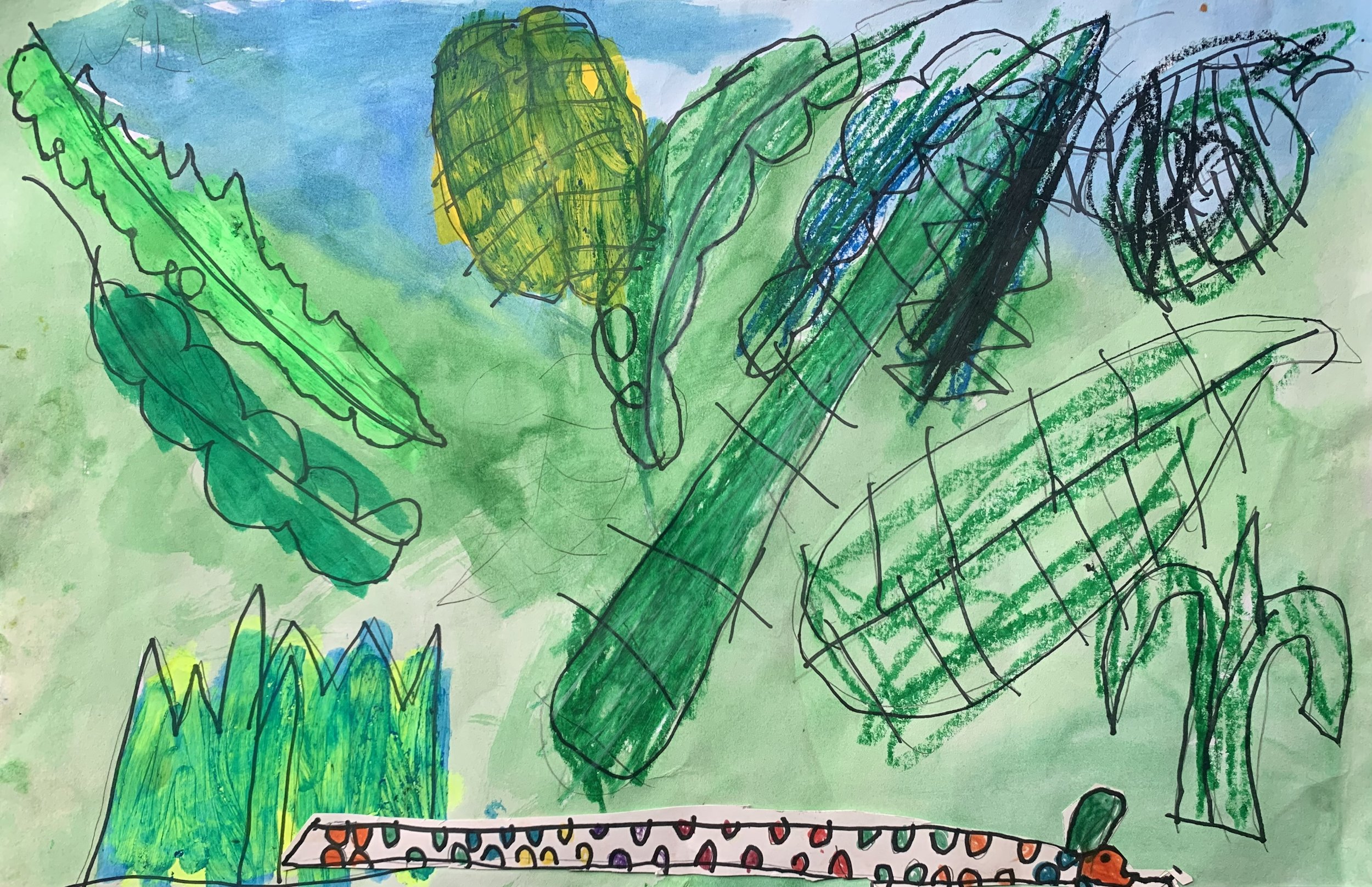
W (Age 5), Caterpillar (2025), Mixed Media on Paper
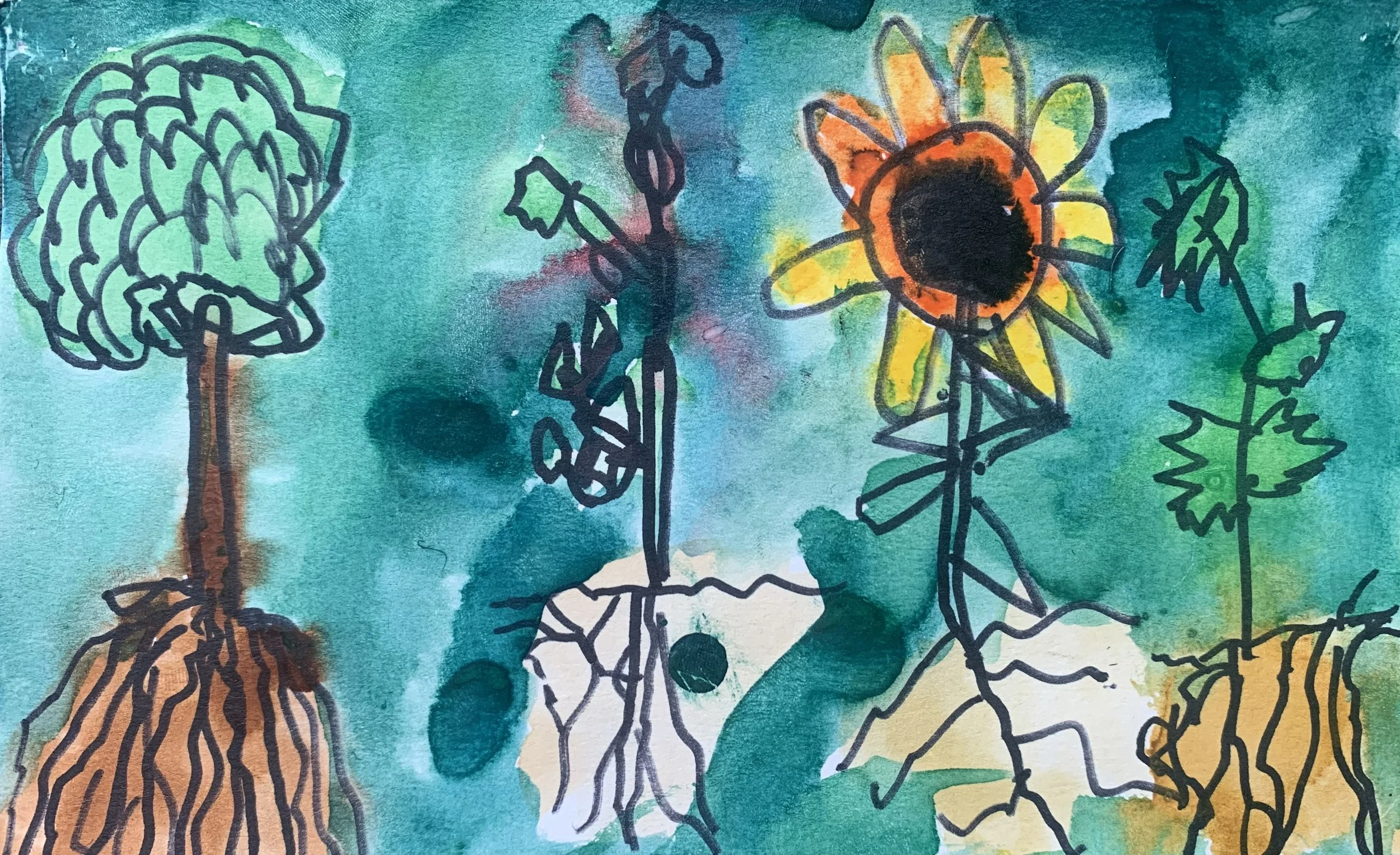
J (Age 6), Plants with Roots (2023), Watercolor on Paper
I. Introduction
We are thrilled to introduce this short story collection, which celebrates everything and everyone that makes Crest View Elementary a wonderful place to work, learn, and grow. By sharing stories from the classroom, this project aims to bring our school’s mission, vision, and values to life, celebrate our teachers and students, support parent education, and provoke new and deeper community connections.
This first installment features outdoor learning experiences and Crest View’s longstanding partnership with Garden to Table. We introduce concepts that shape how our team sets up learning environments to support students’ success, drawing on educators’ expertise in the art and science of teaching and learning alongside what we know about your children’s unique personalities and learning profiles.
In future stories, we’ll step into interdisciplinary lessons in literacy, math, social studies, and science to explore how Crest View educators support students to master essential knowledge and skills, persist in the face of challenges, step outside of their comfort zones, solve problems when inevitable conflicts arise, and much more. For today, please enjoy these reflections from the literal and figurative Crest View gardens.
Disclaimer: These stories were developed with deep admiration — and without any AI whatsoever — by education researcher and writer Alexandra (Allie) Broin in collaboration with Crest View educators. With that said, the views and opinions expressed within are solely those of the author, not the Boulder Valley School District nor any of its employees. Any inadvertent errors or omissions are likewise the sole responsibility of the author.
II. Glossary
Background knowledge refers to the information, vocabulary, and experiences that a learner already has; it is sometimes called “prior knowledge,” “content knowledge,” or “schema.” Background knowledge is important because cognitive scientists have found that learning is more likely to “stick” when new ideas are connected to what a person already knows. Educators regularly activate background knowledge to prime their students’ brains for upcoming learning experiences. Families play an important role in building children’s background knowledge by reading books on a variety of topics, watching and discussing movies or TV shows, and explicitly talking about our home lives, traditions, and cultures (among the many, many other ways we teach our children about the world around us).
Conceptual understanding refers to the “big ideas” of a topic. It is distinct from declarative knowledge (knowing what things are) and procedural knowledge and skills (knowing how things work and having the ability to execute a process with some degree of accuracy and precision). Conceptual knowledge (knowing why things are and why they matter) is important because it enables a person to recognize patterns, make connections, and flexibly apply learning to solve different problems in different situations. If students do not have a firm conceptual understanding of a topic, they are more likely to engage in rote, superficial learning — like memorizing facts — and are less likely to retain knowledge for future use.
Evidence-based refers to instructional strategies that researchers have found to be effective in improving learning and other educational outcomes. Federal law defines four levels (or “tiers”) of evidence: strong (tier 1), moderate (tier 2), promising (tier 3), and theoretical (tier 4). These tiers tell us how confident we can be that replicating a strategy in a new place will yield outcomes similar to those in the original context. To assign a tier, evaluators look at how the strategy has been studied, the significance of the results, and whether there is a good match between the population and setting of a body of research and the educators, students, and schools in a particular community. This matching piece is important because applying evidence-based practices requires that educators understand not only what works, but how it works, for whom, and under what conditions.
III. In the Garden
It’s another unseasonably warm spring day as I stand on the blacktop of the Crest View Elementary courtyard, watching and waiting.
For the umpteenth time, I’ve circumambulated a raised garden bed that is home to a burgeoning patch of garlic. First, to place towers of linking math cubes (our “rulers” for the lesson) atop the planter’s sturdy timber sides. Then, several times over, to adjust the placement of the measuring tools just so and to mentally prepare for the sweet pandemonium that is surely right around the corner.
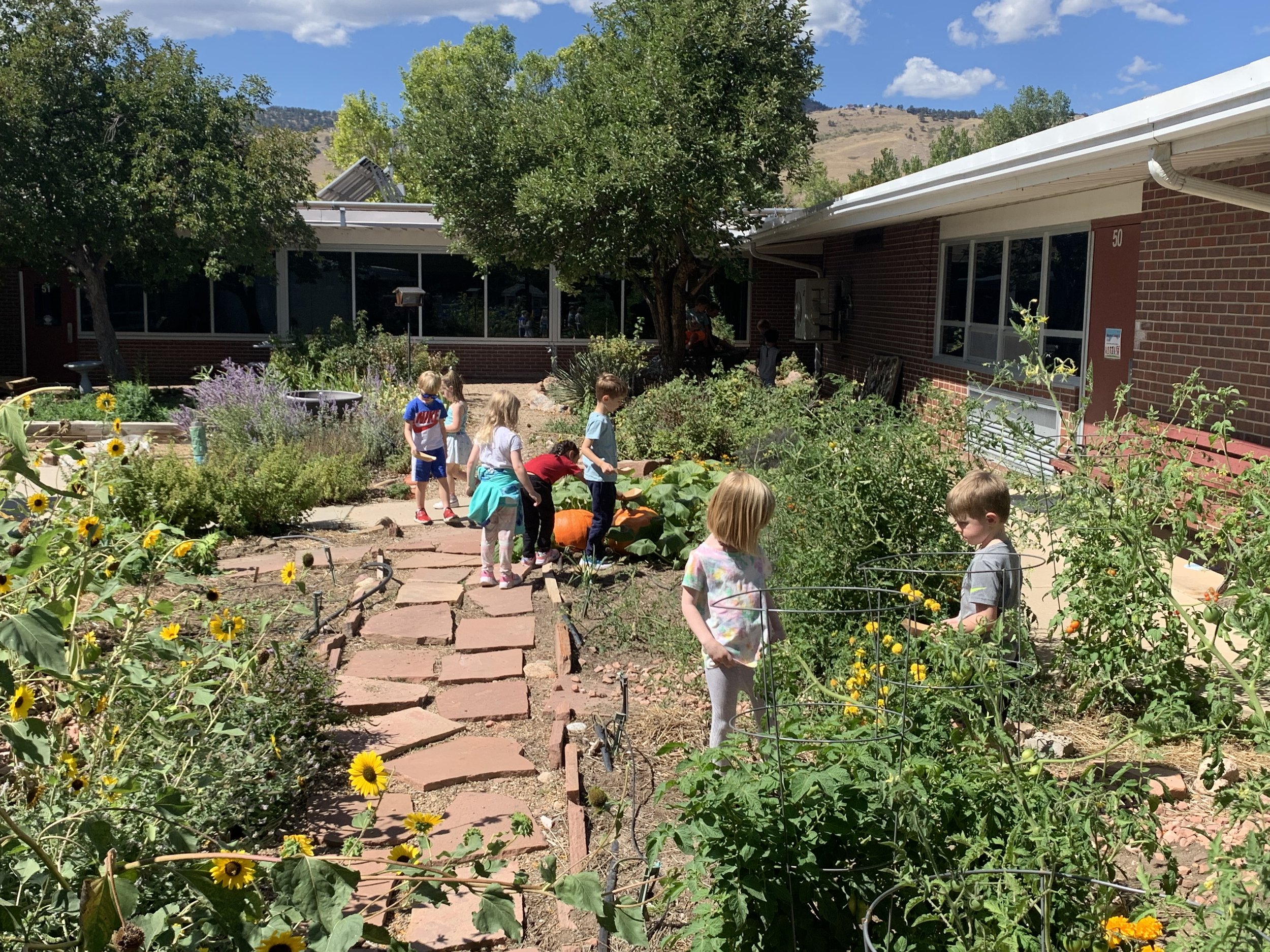
I hear them first: the pitter-patter of sneakers on pavement, the pleasant hum of playful chatter, the occasional shriek of delight. Around the corner, one by one, a dozen or so children emerge. They’re walking in an orderly line behind the kind and increasingly confident teacher-in-training who has worked and learned alongside the young pupils all year. A fellow parent volunteer scoots a few dawdlers along from the rear.
The children see me, point at the vibrant green leaves reaching up, up, up from the soil (fragrant, curlicue garlic scapes will sprout in the coming weeks), and spy the brightly colored manipulatives awaiting their eager hands.
As they step out of the angular shadow cast by the school building and into the bright sunlight, the children speed up. A couple of quick steps at first, and then with growing momentum. It’s as if each is solar-powered by the big, hot Colorado sun. I sigh, smile, and relax as they zoom over.
The kindergarteners have entered the garden.
(Well, one half of one class, at least. We’ll rotate in about 20 minutes and do it all again with the rest of the crew. The other room will take their turn next week.)
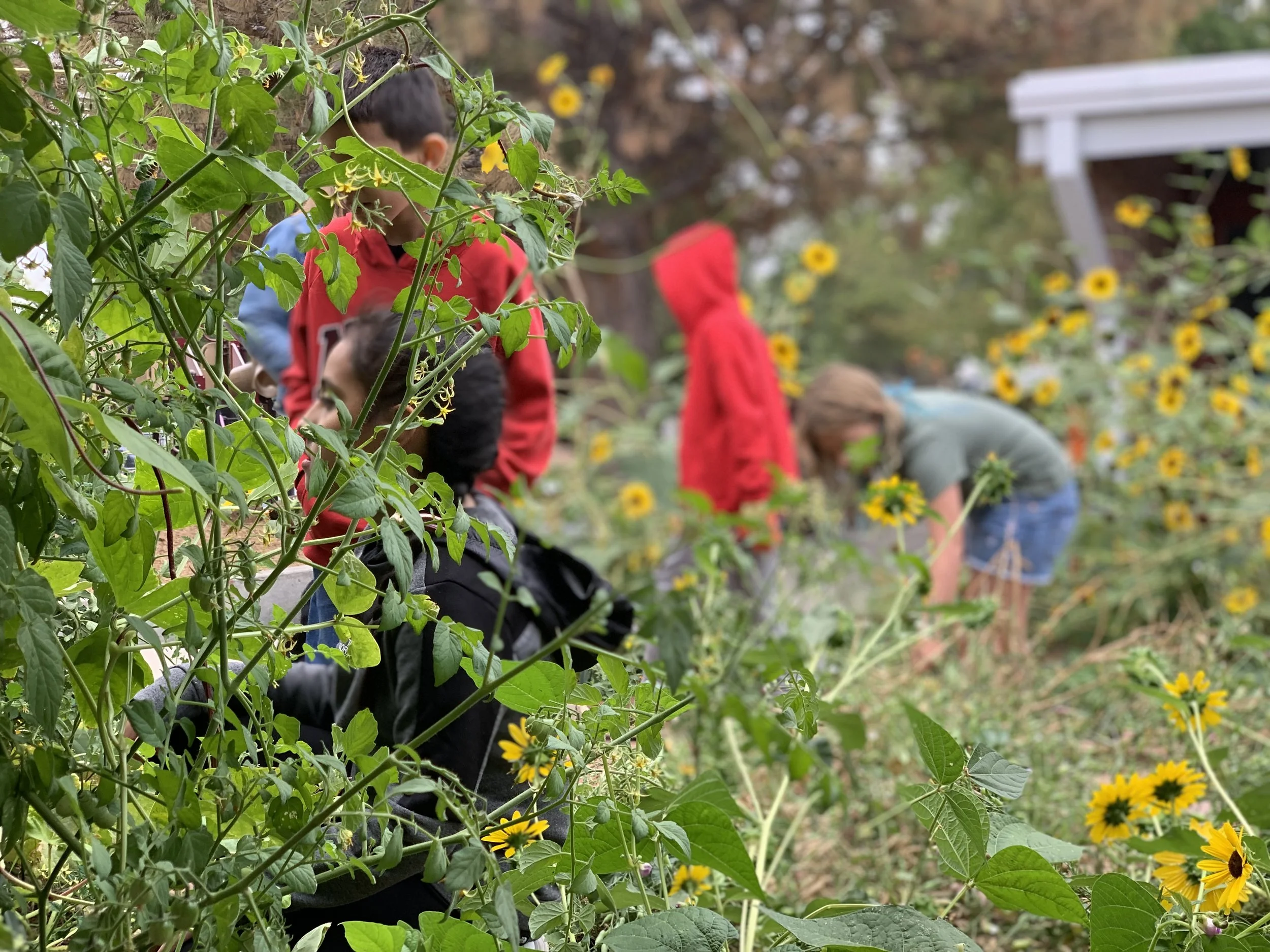
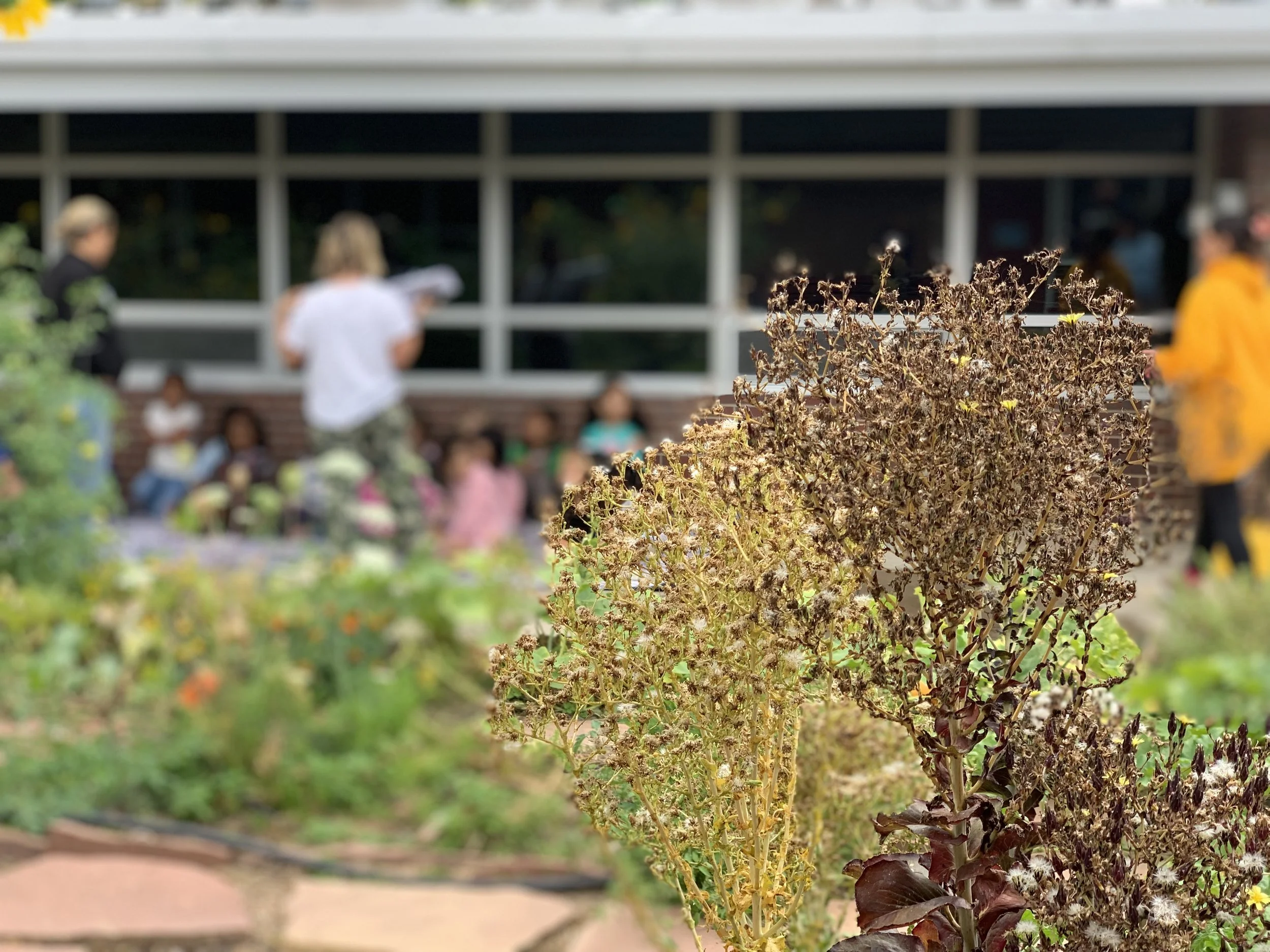
The previous fall, the kindergarteners had begun learning about plant growth through a series of lessons developed by Garden to Table, a local nonprofit that supports outdoor learning in school-based gardens at 18 facilities across the Boulder Valley School District.
Historically, teachers and parent volunteers have taught the lessons. This year, with support from a new U.S. Department of Agriculture grant, Ms. Charlotte — a former Crest View parent and garden volunteer who is now a program director with Garden to Table — leads the sessions. Teachers and volunteer grade-level leads (like this writer) continue to support garden management and coordination.
Additional chaperones are invited to pop in for a lesson or two throughout the fall and spring, and to help care for the gardens after school and over the summer. This is especially important for the delicate lettuces, which the first graders plant in the springtime and the second graders harvest for “Rainbow Day” — an annual celebration during which all Crest View students are encouraged to “eat a rainbow” at lunch by selecting a variety of colorful fruits and vegetables from the salad bar.
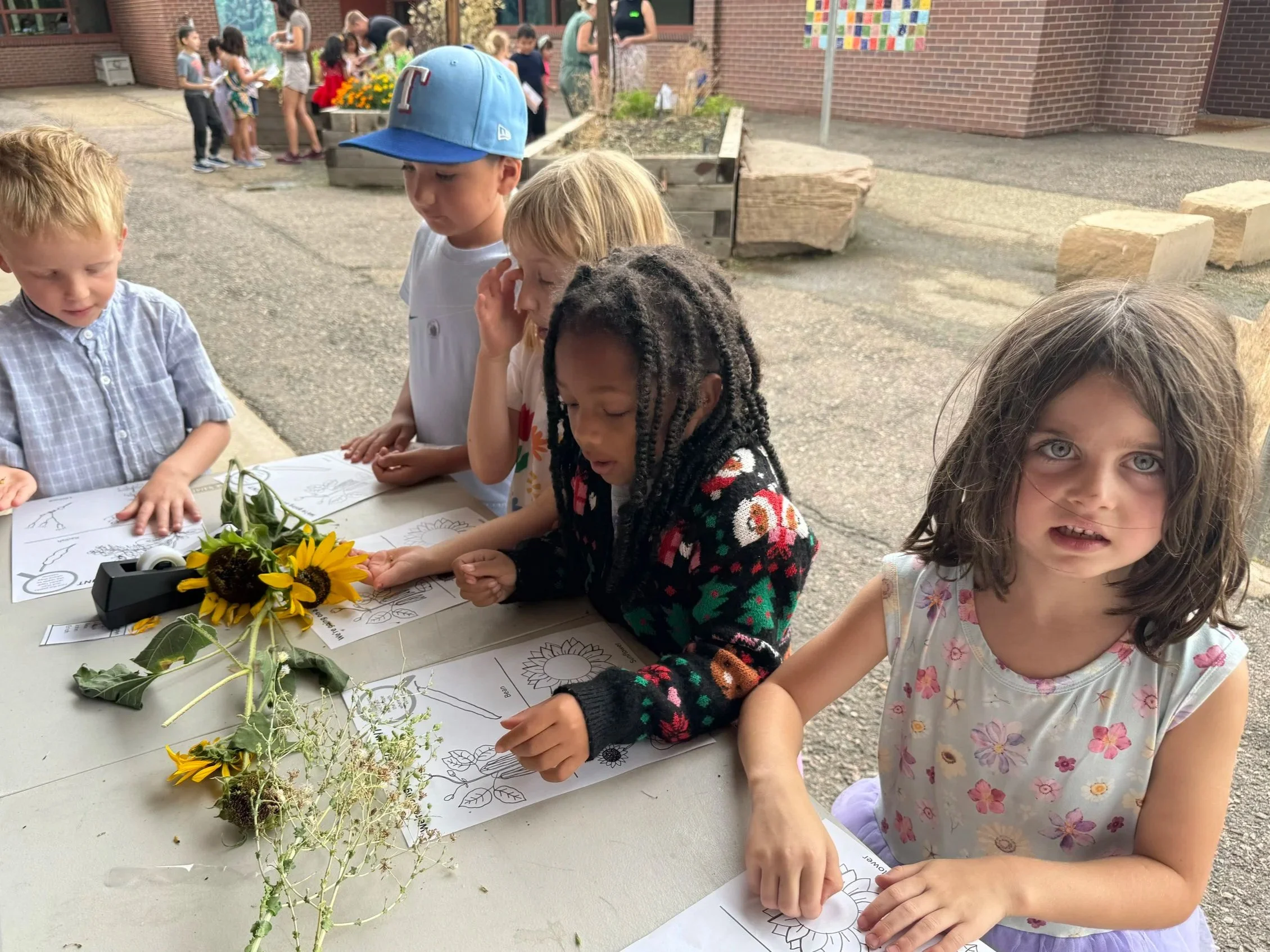
To get started with the garden programming last fall, we invited the kindergarteners to explore the in-ground gardens directly adjacent to the playground. The objective? To investigate the role of the sun in plant growth. The experiment? Testing whether ice cubes melt faster or slower in sunlight or shade. At this age, students build their conceptual understanding of photosynthesis before getting into the detailed mechanics of the process.
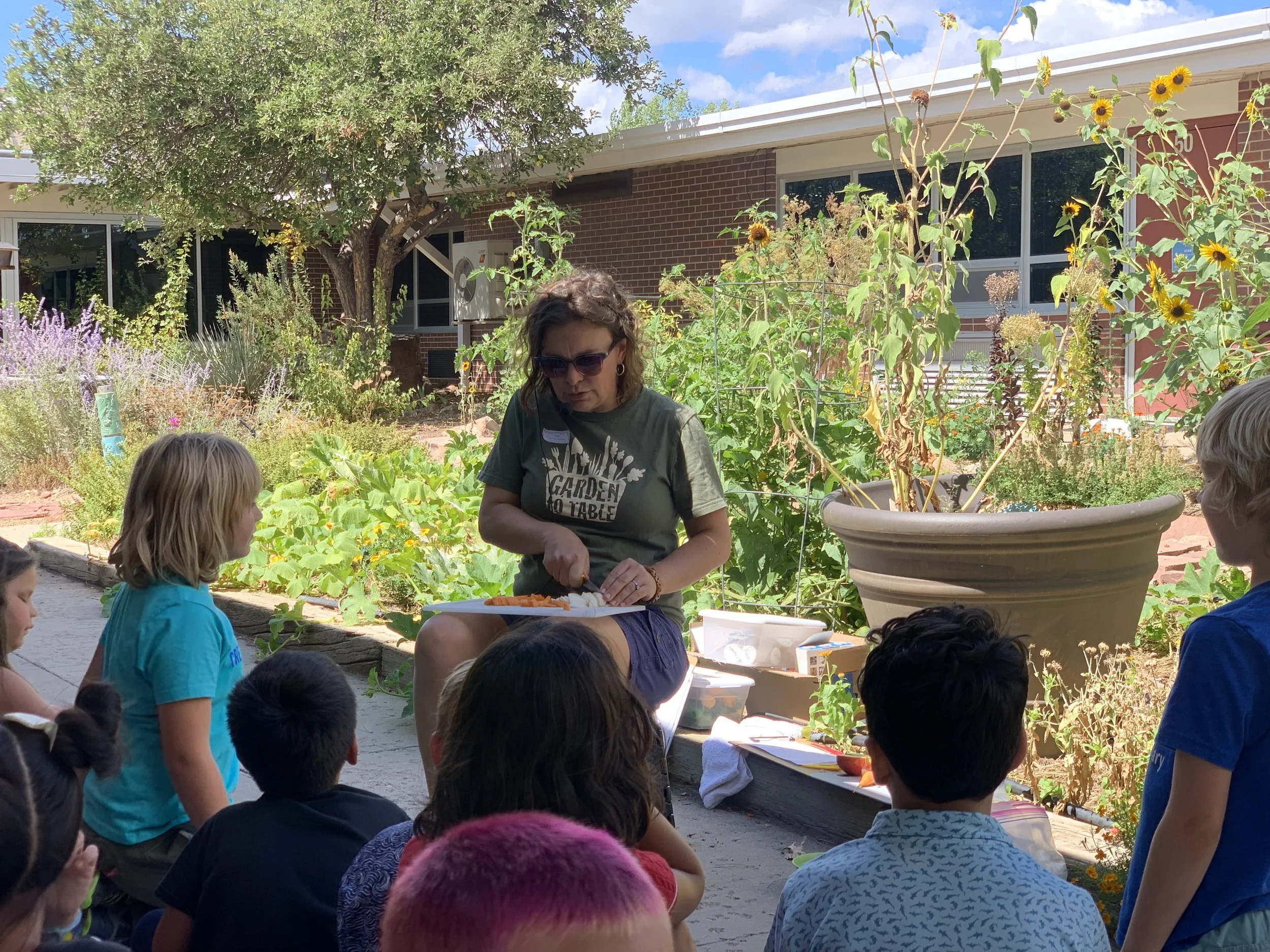
The next lesson was the real deal. First, Ms. Zungolo and Ms. Lindsay explored the children’s background knowledge by inviting the kindergarteners to share what they know about garlic and how they use the tasty ingredient at home. About half of the students in each class shared a connection or question in a few brief minutes. The teachers then broke apart large garlic bulbs and passed them around the room, introducing important vocabulary words (in English y en espanõl) and inviting the children to feel the flaky skin, to hear it softly crunch between their fingers, and, of course, to inhale the vegetable’s sharp, spicy aroma.
Ms. Zungolo spoke to the children with the calm, steady cadence of an educator who has spent decades fine-tuning her delivery to match — and gently redirect, when needed — the tempo of the children. Across the hall, Ms. Lindsay replicated that rhythm, and her infectious laugh filled the classroom as she engaged the kindergarteners in lively conversation.
Both teachers’ voices were subtly amplified by a microphone that made the teacher-directed portion of lessons more accessible for students with disabilities or learning differences, English learners, and really any other child who might benefit.
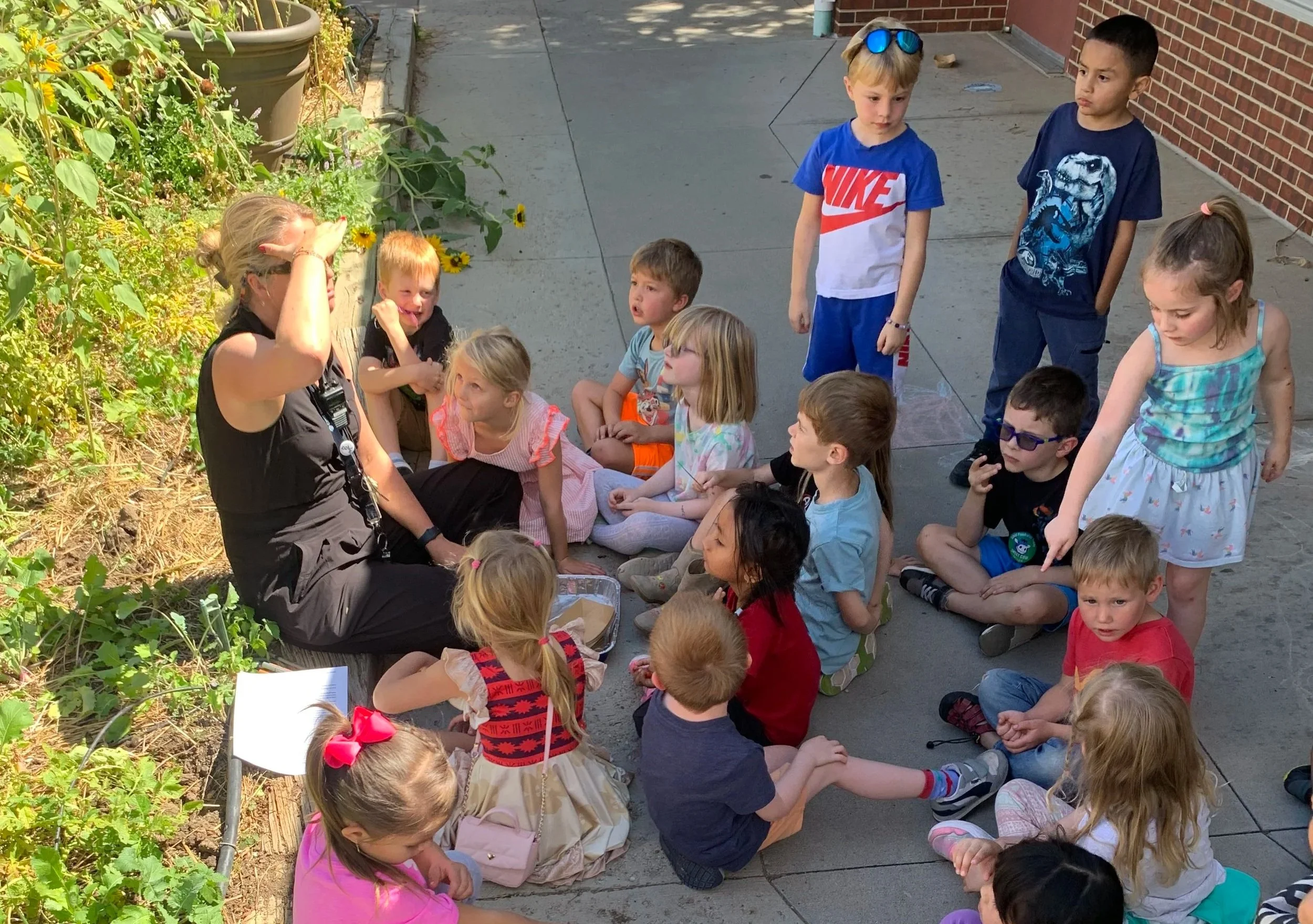
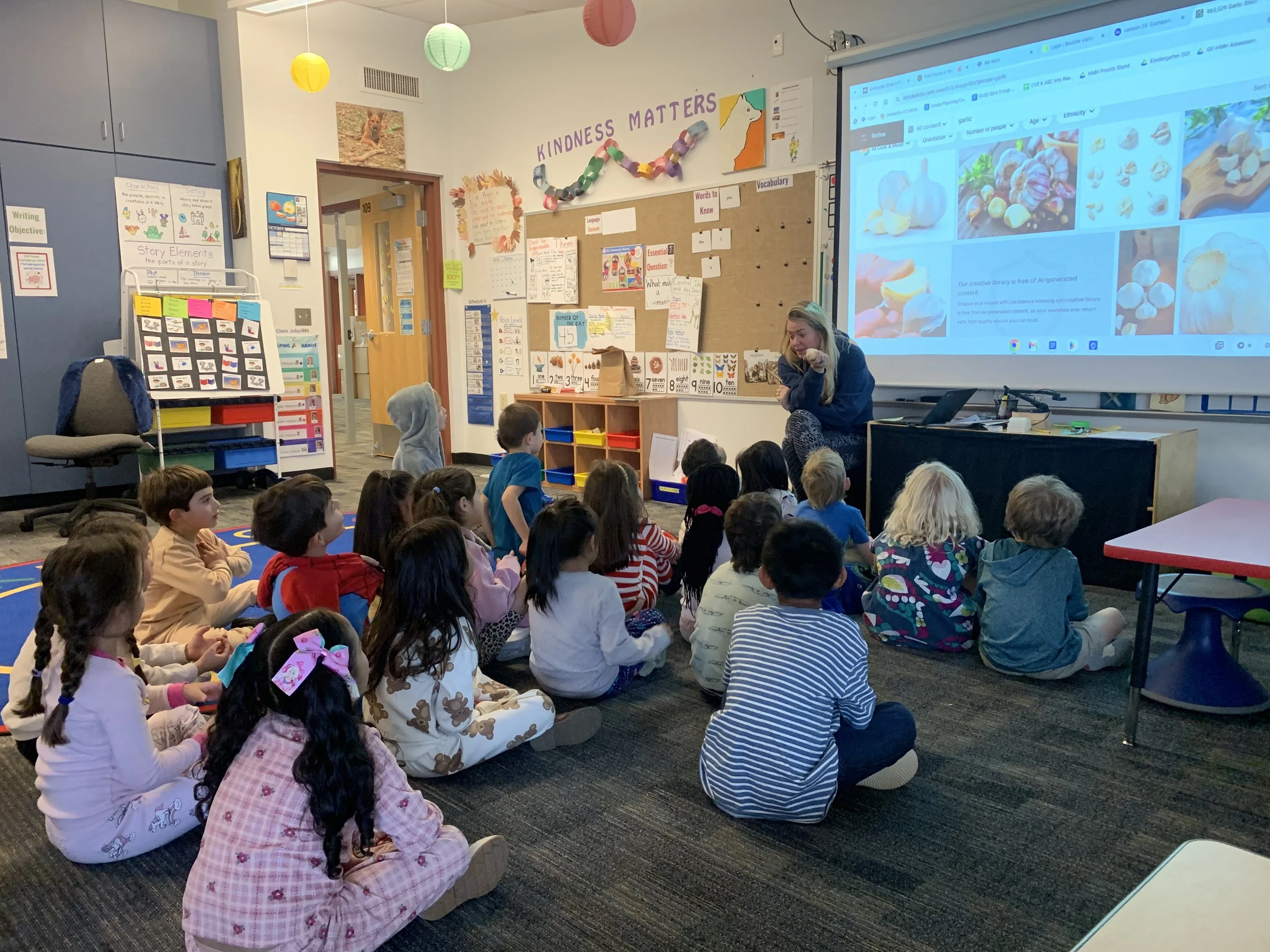
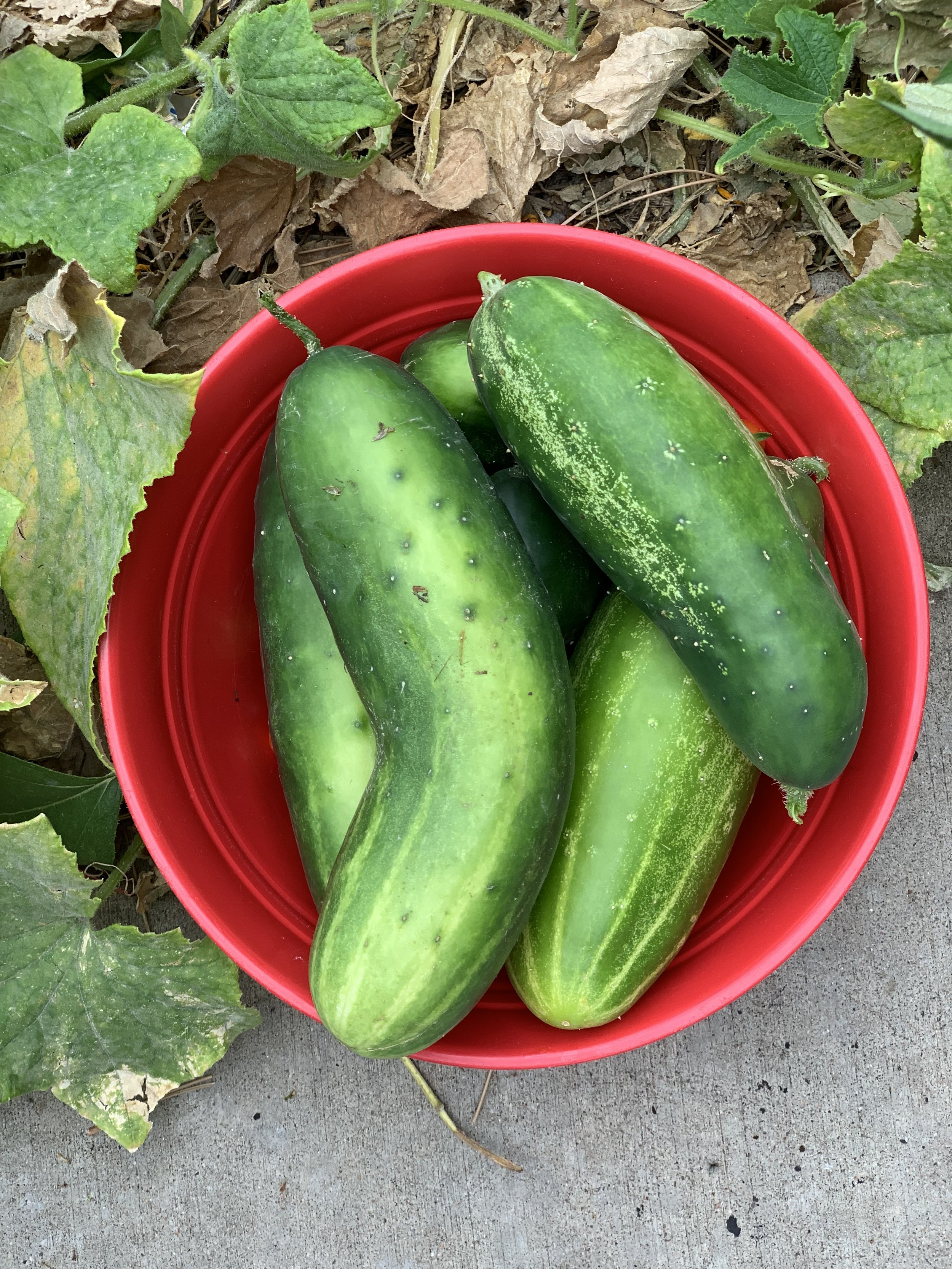
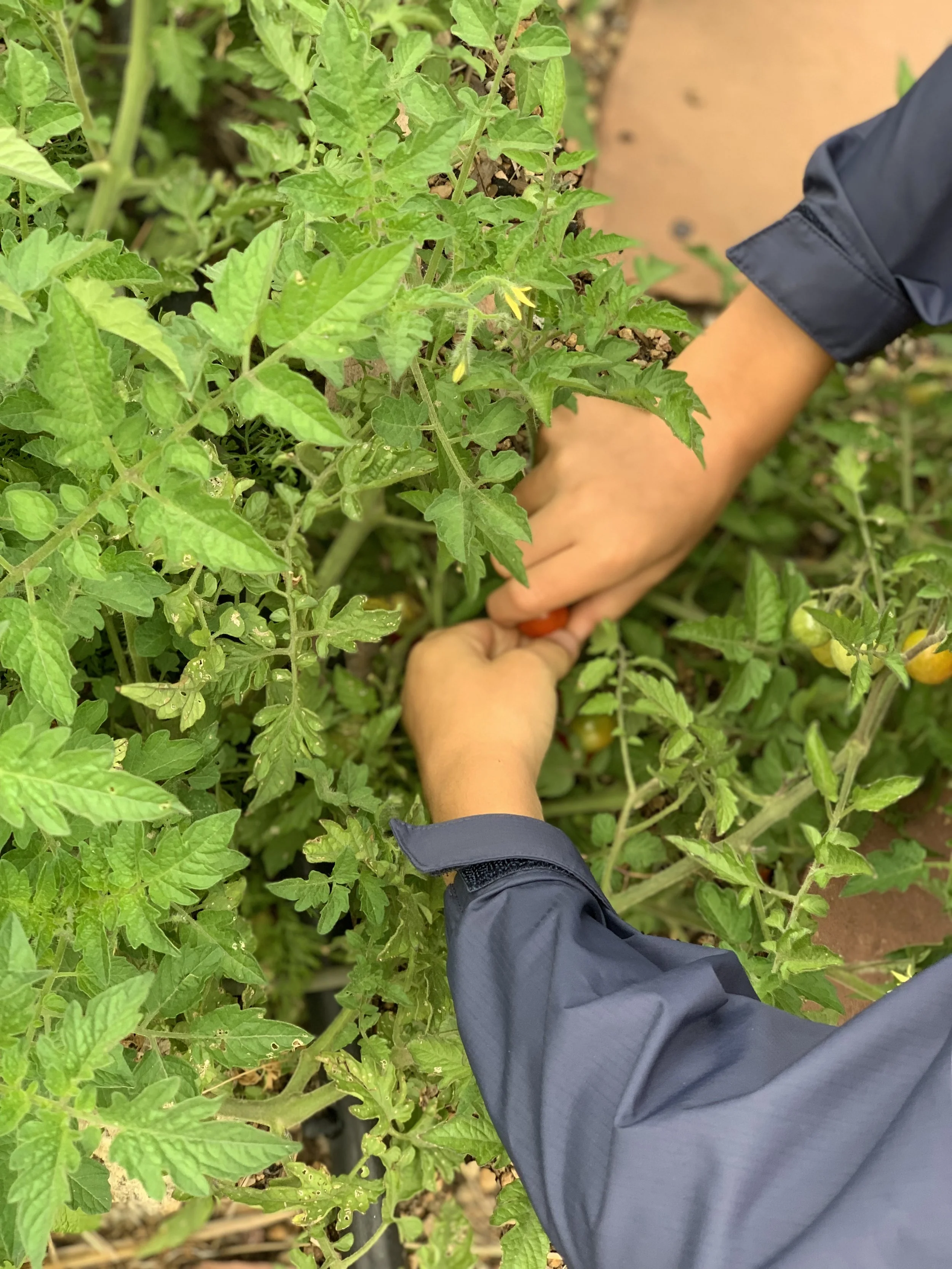
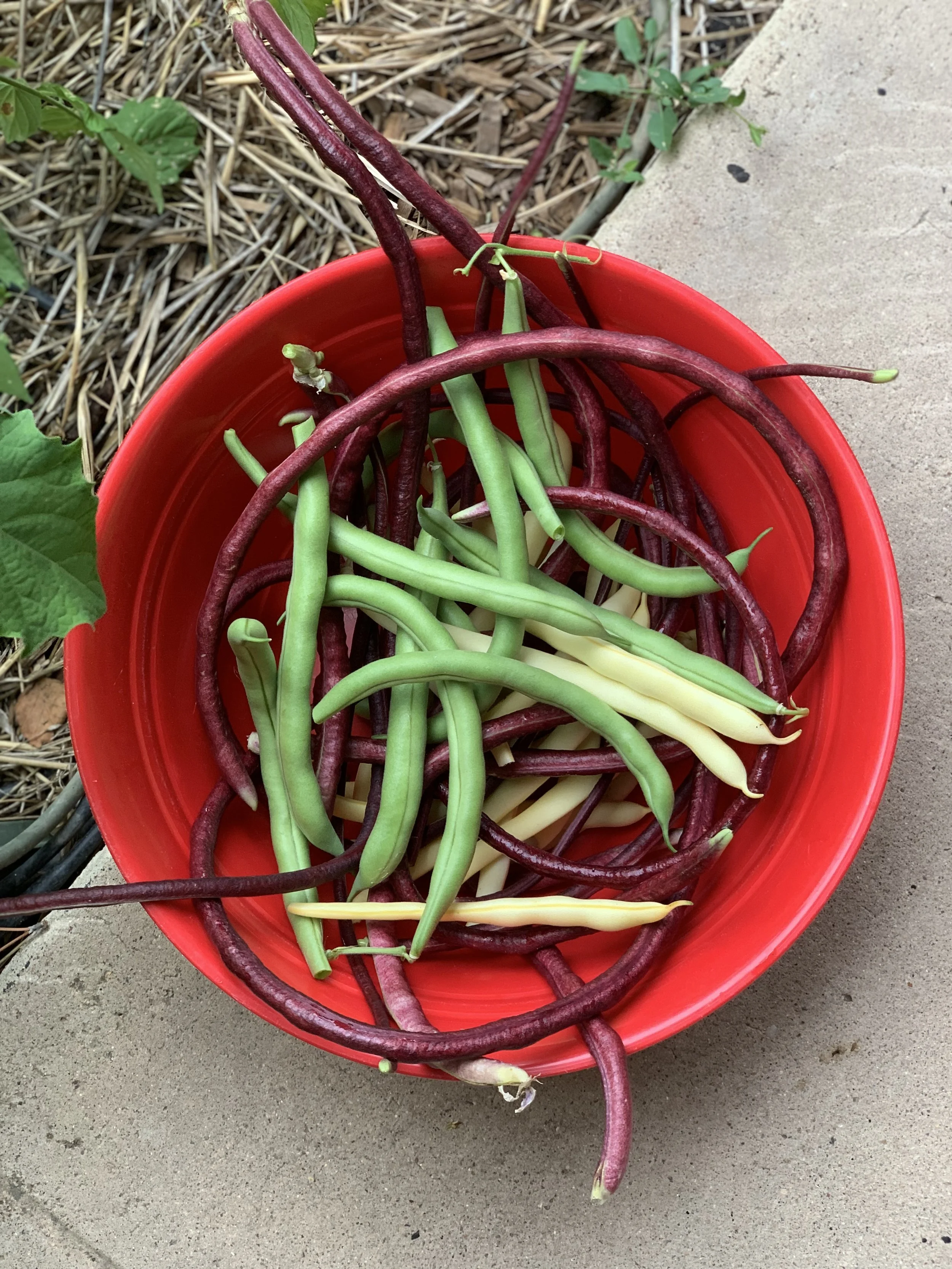
From there, half of the kindergarteners headed outside with Ms. Margo or Ms. Jackie, skilled paraeducators whose warm and welcoming auras attracted the kindergarteners like bees to honey. The children tasted garlic-herb pita chips before getting their hands dirty planting the pungent cloves. (In other lessons, students snack directly on delectable garden treats; the third graders harvest and snack on radishes, for example, while the fourth graders taste beans, cucumbers, and peppery nasturtium petals.)
The other half of the class remained in the room to play math games with their teachers, estimating whether the number of cloves in one head of garlic was greater than, less than, or equal to the number of cloves in another (a fun and engaging way to develop their proficiency in Colorado math standard 1) and then checking their predictions by adding each bunch up. Thirty minutes later, we switched.
Watching the children at work in the garden is utterly delightful. After tucking a clove snugly into the soil, one kindergartener proceeded to pat the mound she had moved atop it with a small trowel for what felt like ages (“There!” she eventually declared, evidently satisfied with the task, although what prompted her contentment remained an intriguing mystery to the adult observers).
In addition, while most of us attempted to insert our cloves into the soil with the root scars facing down and the pointy ends facing up, and we were mostly successful, one kindergartener casually tossed his garlic toward the 3-inch-deep hole he had dug as if it were a tiny, misshapen basketball (“Bucket!” I nearly shouted, before wondering whether I should cheer or chastise the smirking athlete-cum-gardener).
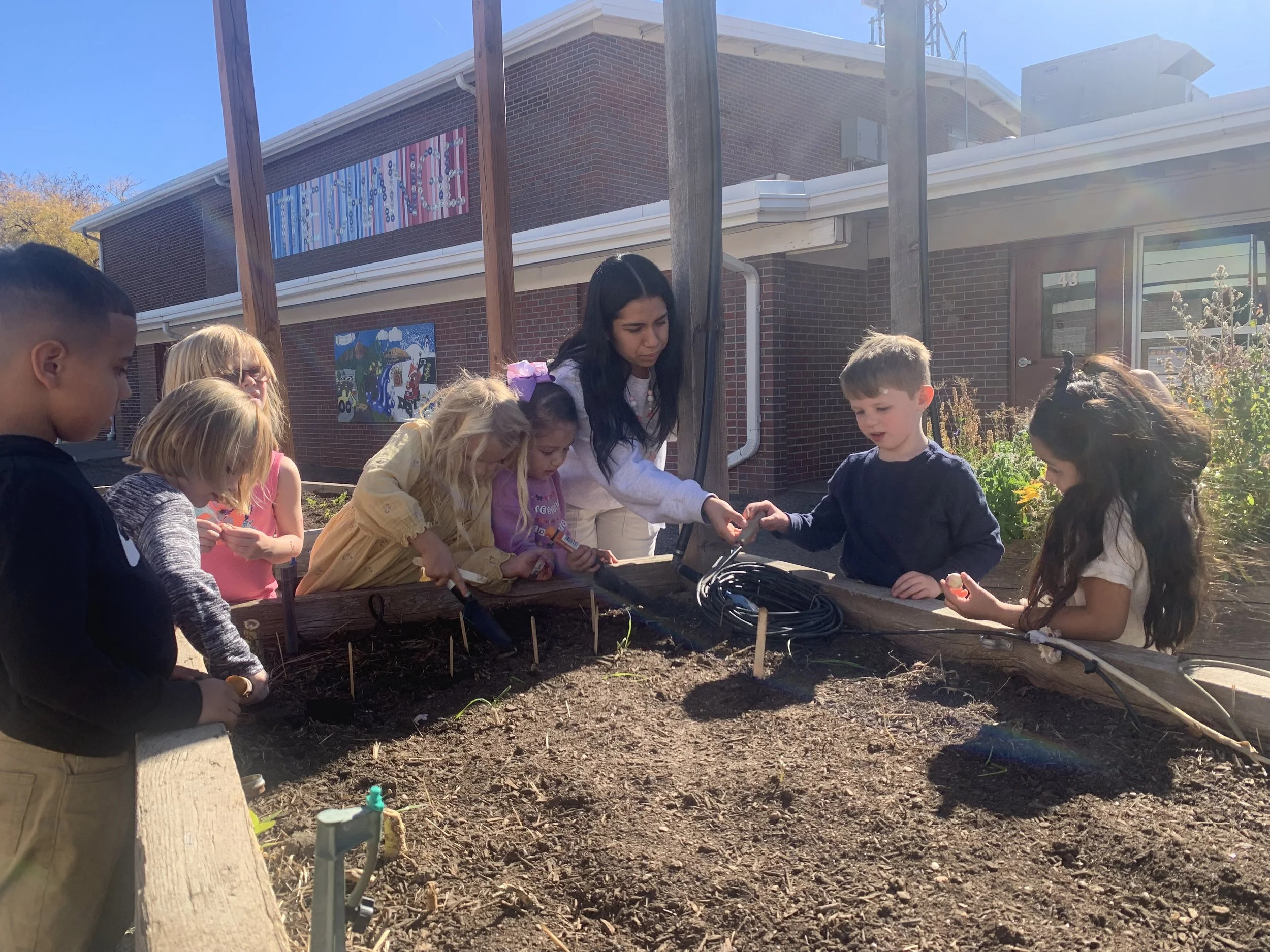
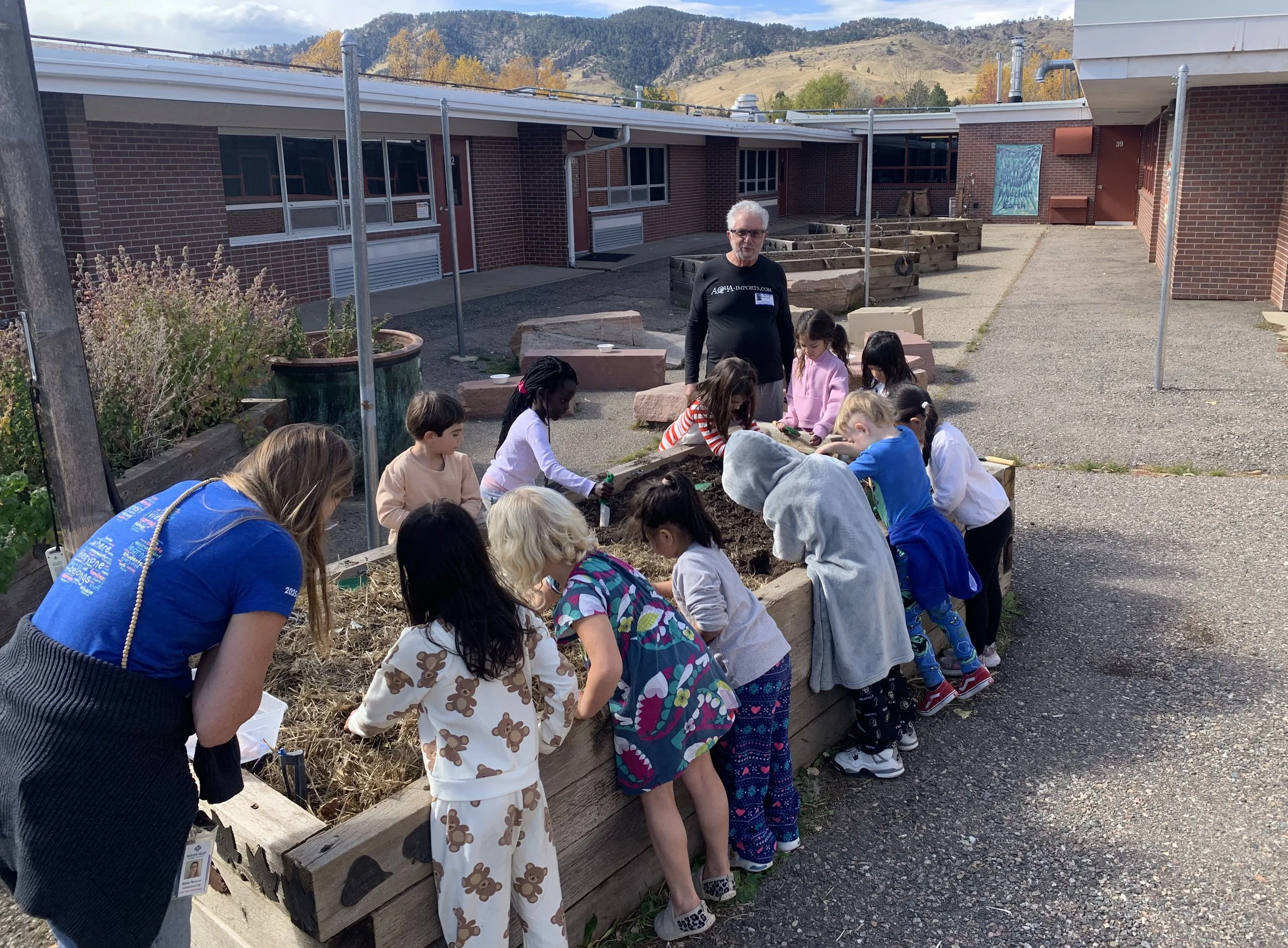
In these early kindergarten lessons, our goal was to help the children get acquainted with the gardens more so than to hone a specific horticultural technique. That said, the entire program builds the children’s procedural knowledge and skills by providing clear, step-by-step directions, and offering lots of hands-on practice. Further, the lessons are sequenced both within and across grade levels so the children experience “the why” behind the order of operations, reinforcing how their work in the garden reflects various plant life cycles. By the time the fifth graders prepare the gardens for spring planting, they have a strong grasp of how the entire garden ecosystem works together.
But the best part of being in the garden? It’s oh-so-much fun!
And, indeed, during each of our lessons, the kindergarteners did what kindergarteners do: they played! (“The work of children,” Ms. Zungolo and Ms. Lindsay had explained in a welcome message to families over the summer.)
To keep up with the children’s curiosity, imagination, and near-constant movement (and support them not to unearth the cloves they had already planted), the grownups called an audible part-way through that second lesson. We quickly created a makeshift station at an unused portion of the garden bed where the kindergarteners could dig, dig, dig to their little hearts’ delight, narrating stories about the personalities and adventures of the bugs, debris, and other treasures they discovered down in the soil.
IV. Gardeners, Not Carpenters
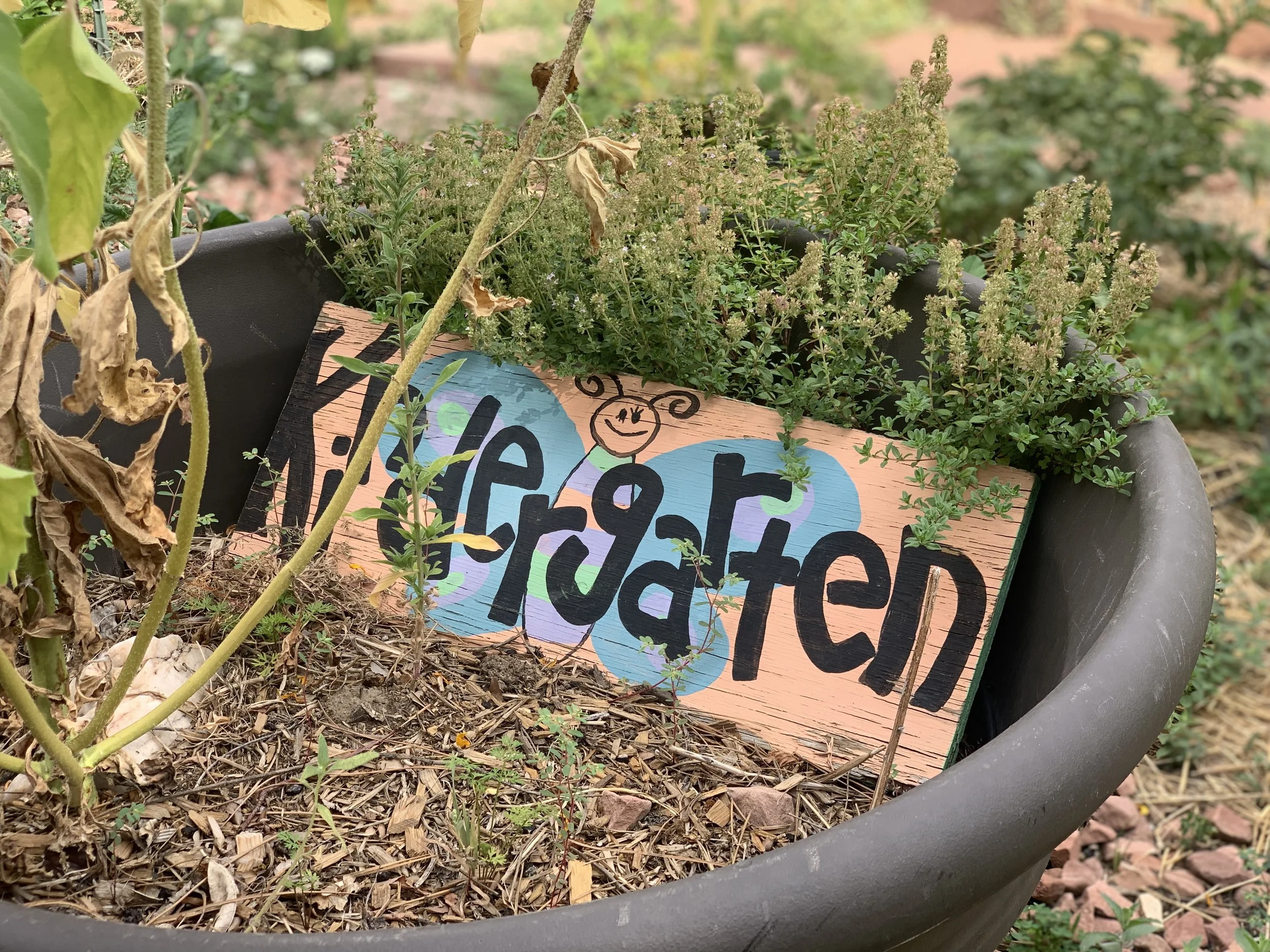
In 1839, Friedrich Fröbel coined the term “kindergarten” (or “garden of children”) to encapsulate his revolutionary views on early childhood education, especially the role of self-directed inquiry, open-ended play, relationships, and, yes, actual gardening in children’s development.
Two years earlier, the German teacher and educational theorist had launched the first-ever program specifically designed for youngsters in the years leading up to formal schooling. At the time, public education was characterized by rote learning and rather draconian disciplinary practices. Dissatisfied with status-quo educational methods and convinced the early years mattered greatly for children’s development, Fröbel built something wholly new.
Likewise dissatisfied with the original name for his program (“Spiel- und Beschäftigungsanstalt” or “Institution for Play and Occupation,” which, even in German, is a bit of a mouthful) and unable to find a more suitable and illustrative term, he eventually created his own.
“Children are like tiny flowers,” Fröbel offered by way of explanation, “they are varied and need care, but each is beautiful alone and glorious when seen in the community of peers.”
Fröbel’s affirming ideas about children strongly influenced the work of early childhood pedagogues like Maria Montessori, Rudolf Steiner (founder of the Waldorf approach), and Loris Malaguzzi (founder of the Reggio Emilia project). Fröbel also laid the groundwork — you might say tended the soil — in which the ideas of other prominent educational practitioners took root, like John Dewey’s progressive schooling model (especially its focus on citizenship, community, and the social aspects of learning) and Lev Vygotsky’s “zone of proximal development” (which is the basis for the many ways educators scaffold just-right learning challenges so that students can engage in productive struggle to master new skills).
Today, a large and growing number of rigorous studies have verified much of what Fröbel and generations of innovative educators have long understood to be true about children’s learning and development. Alison Gopnik — a professor, psychologist, and philosopher who specializes in children’s cognition — has drawn on this body of research to offer a call to action for modern parents and educators, alike, that could have been pulled straight from Fröbel’s field notes.
Children are not, Gopnik explains, pieces of furniture built to specification with a predetermined output in mind. They are, instead, wildly unique and beautifully diverse beings. They must be supported to reach important academic and developmental milestones, to be sure, but also to blossom into whoever it is they are meant to become.
Her advice? To approach our roles in young people’s lives as gardeners, not carpenters.
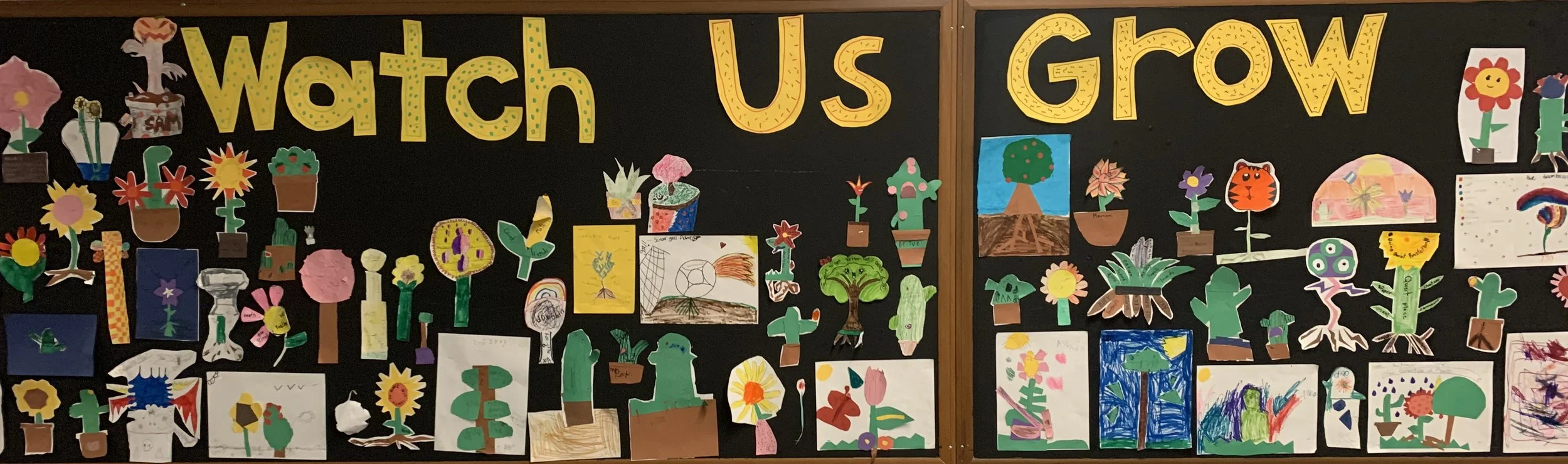
The metaphorical role of gardener is one that Crest View educators have embraced, and that they exemplify in their day-to-day work with our children. It’s also at the heart of this year’s school theme: “Know Them. Grow Them.”
At a recent meeting of Reach Out Crest View or ROCV, our school’s parent-teacher organization, Principal Eric Hamilton explained that this theme is an extension of last year’s focus on cultivating a schoolwide culture in which “Everyone Belongs” — where every member of the community feels seen, understood, and valued.
This year, the team continues to prioritize fostering strong, trusting relationships between school staff, children, and families, and they have added a new emphasis on showcasing the many ways educators use what they know about the “whole child” (including students’ social, emotional, physical, mental, and cognitive assets and needs) to strategically plan and regularly adjust their instruction. The goal, always, is to support the academic achievement and healthy, well-rounded development of our children.
By hearing about our kids’ lives outside of school, observing them in class and on the playground, studying students’ work, and reviewing assessment data, “teachers can really understand students’ strengths, growth areas, personalities, interests, and all of the little intricacies that make up who they are,” Principal Hamilton explained. All of that information is necessary, he added, because one-size-fits-all solutions simply don’t cut it in education — especially when you are fortunate enough to be part of a learning community as wonderful and diverse as Crest View.
“The garden is a powerful symbol of what all of this means for our educators and students,” Principal Hamilton reflected.
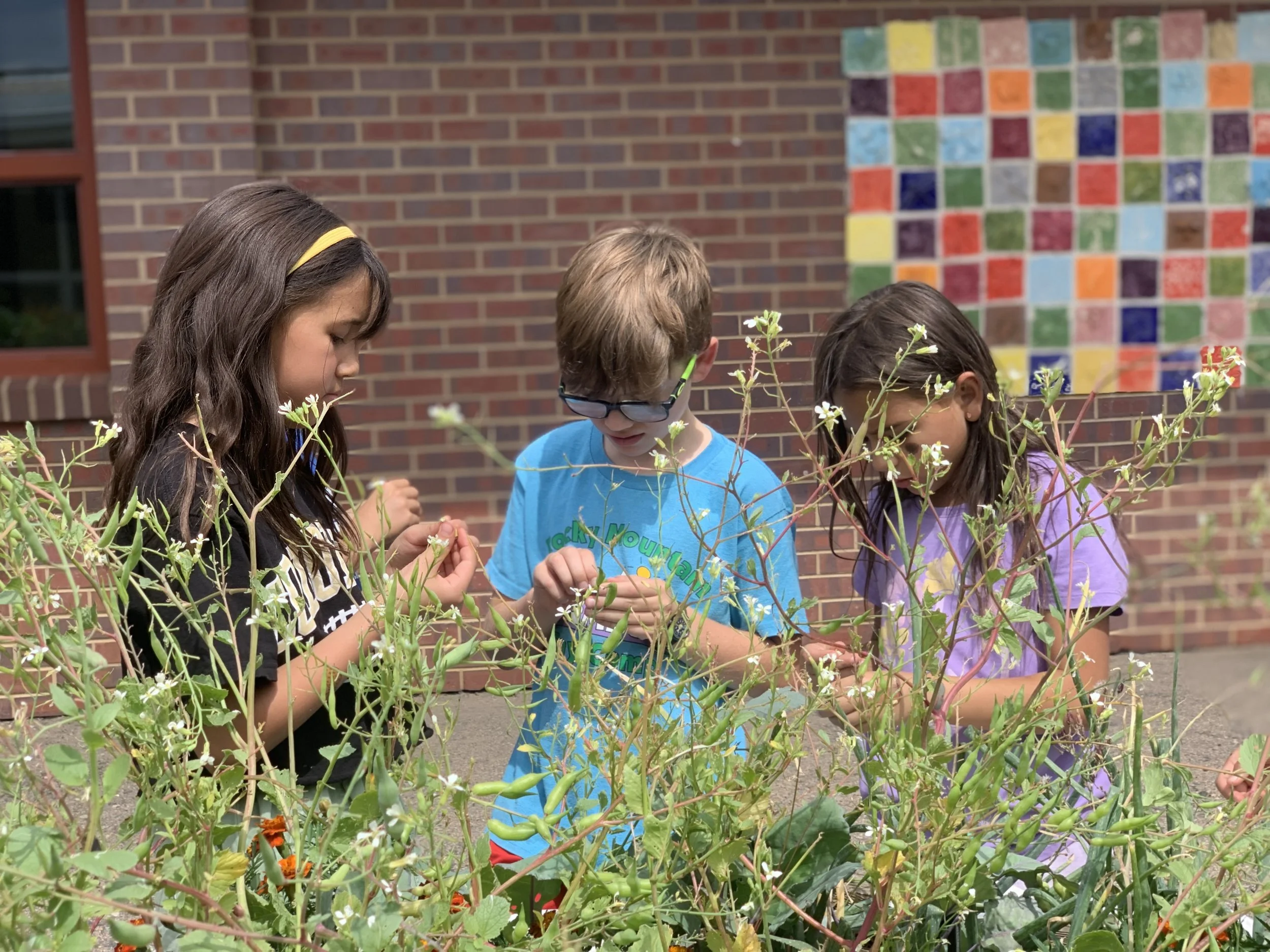
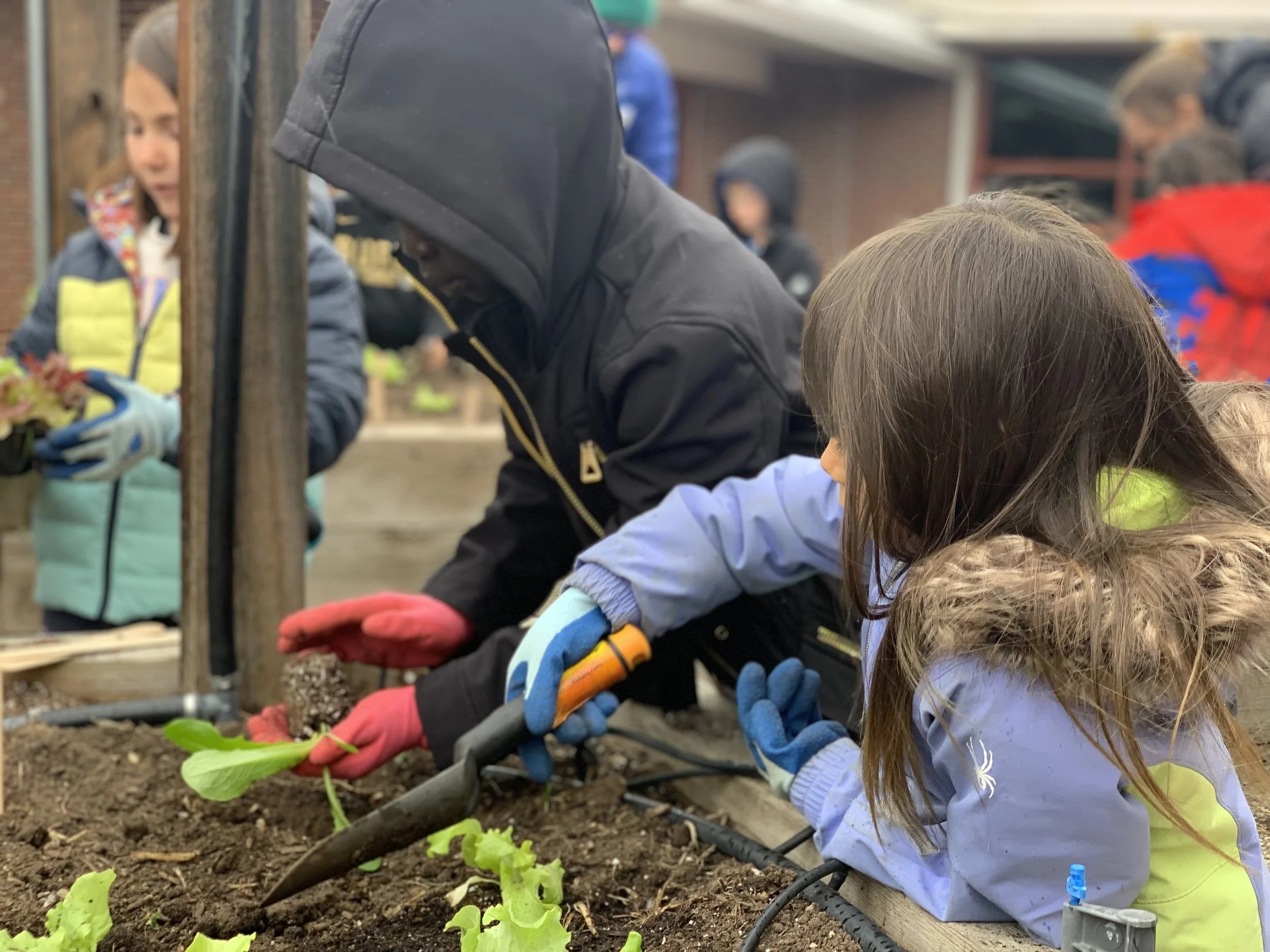
Gardeners, for example, know how to cultivate the soil in which a variety of plants can flourish. They invest in nutritious compost, plant fruits and vegetables where they’ll be exposed to optimal sunlight, place complementary plants alongside one another (including co-locating with pollinators where needed), and make sure to neither over- nor under-water the roots. They also spend a lot of time in the garden noticing and wondering, regularly matching the care and attention that goes into planning the space with a steady focus on identifying which adjustments are needed for which plants throughout the season.
Likewise, Crest View educators have expertly set up their classrooms to support predictable rituals and routines, flexibly and intentionally group students based on a variety of factors (from their dispositions and test scores to the particular goal of a lesson), and have embraced stronger pedagogical practices embedded in recently adopted, high-quality instructional materials (like the Into Reading and Illustrative Mathematics curricula).
They’ve also revamped the schedule to enhance learning experiences for the entire student population, including via a new schoolwide reading period, co-teaching sessions at every grade level, and “What I Need” or “WIN” blocks specific to literacy and math. Together, these shifts provide students with access to multiple opportunities for personalized interventions, specialized services, and acceleration every single day.
In other words, holistic improvement strategies serve as the foundation in which educators simultaneously care for the unique needs of each individual flower — err, I mean student — in their care by enacting the right instructional moves for the right students at the right moment in time.
If it seems exceptionally complex, that’s because it is. If it feels like too much, families can rest assured that it’s not. While media reporting and everyday discourse on education tends to emphasize best practices in teaching and learning with an air of absolute certainty about “what works,” the reality is much more nuanced (and interesting!).
“Educational research is not a blunt instrument that shatters all doubt about best practice,” Robert J. Marzano explains in The Art and Science of Teaching: A Comprehensive Framework for Effective Instruction. “Rather it provides general direction that must be interpreted by individual districts, schools, and teachers in terms of their unique circumstances. In short, research will never be able to identify instructional strategies that work with every student in every class.”
A more accurate way to view evidence-based instruction is as a series of approaches drawn from what researchers have learned from rigorous study — often in controlled clinical settings — that expert educators must then translate into the much messier realities of real-world classrooms and schools. In this light, it’s clear that Crest View educators’ shared focus on building strong, consistent learning environments paired with careful data analysis, purposeful differentiation, and regular recalibration is the very essence of extraordinary teaching.
V. In the Garden, It’s All About Growth
And the result of these meticulous and coordinated efforts?
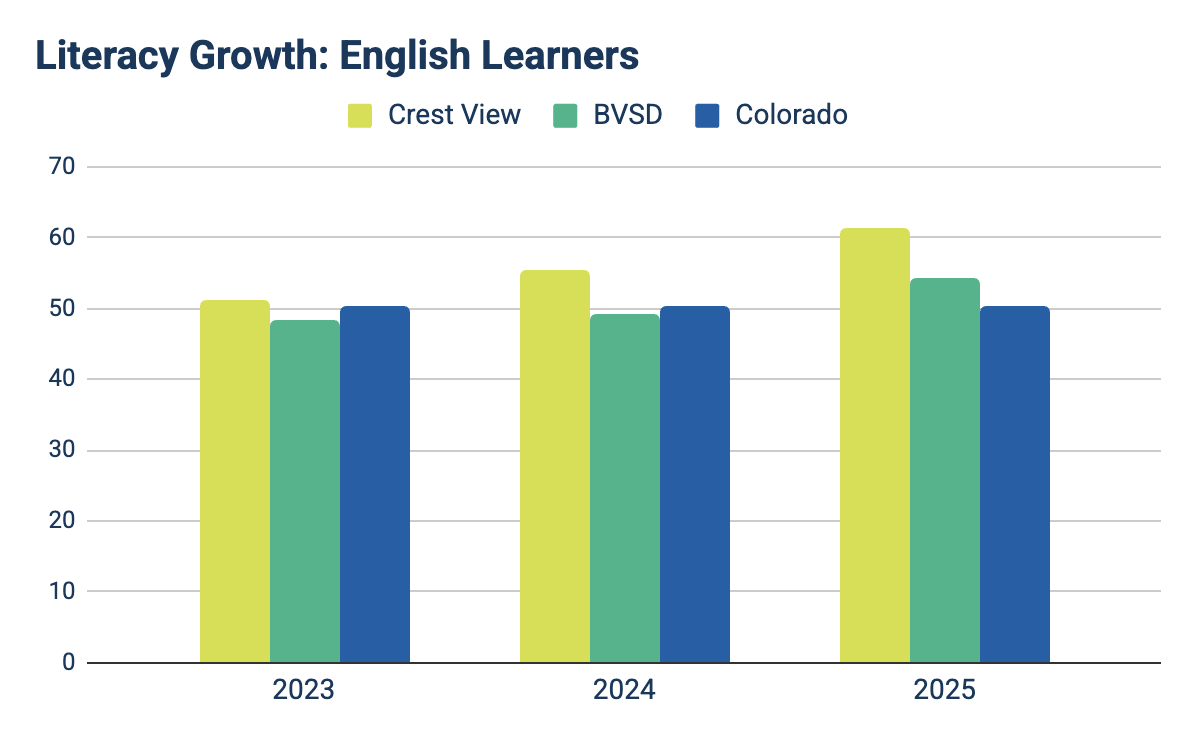
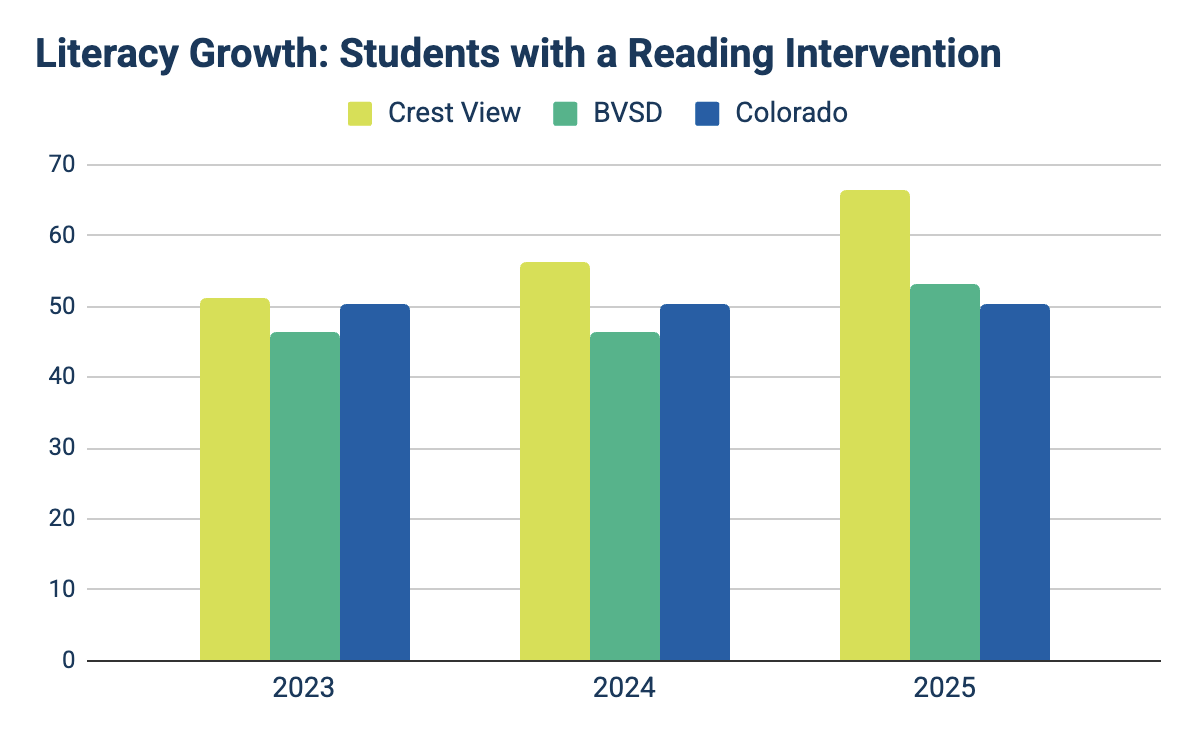
Like those remarkable gardeners who manage to produce a bounty every year, no matter the weather nor the changing composition of the garden bed, Crest View educators have supported impressive growth* in students’ literacy skills in recent years — outpacing state and even district averages.
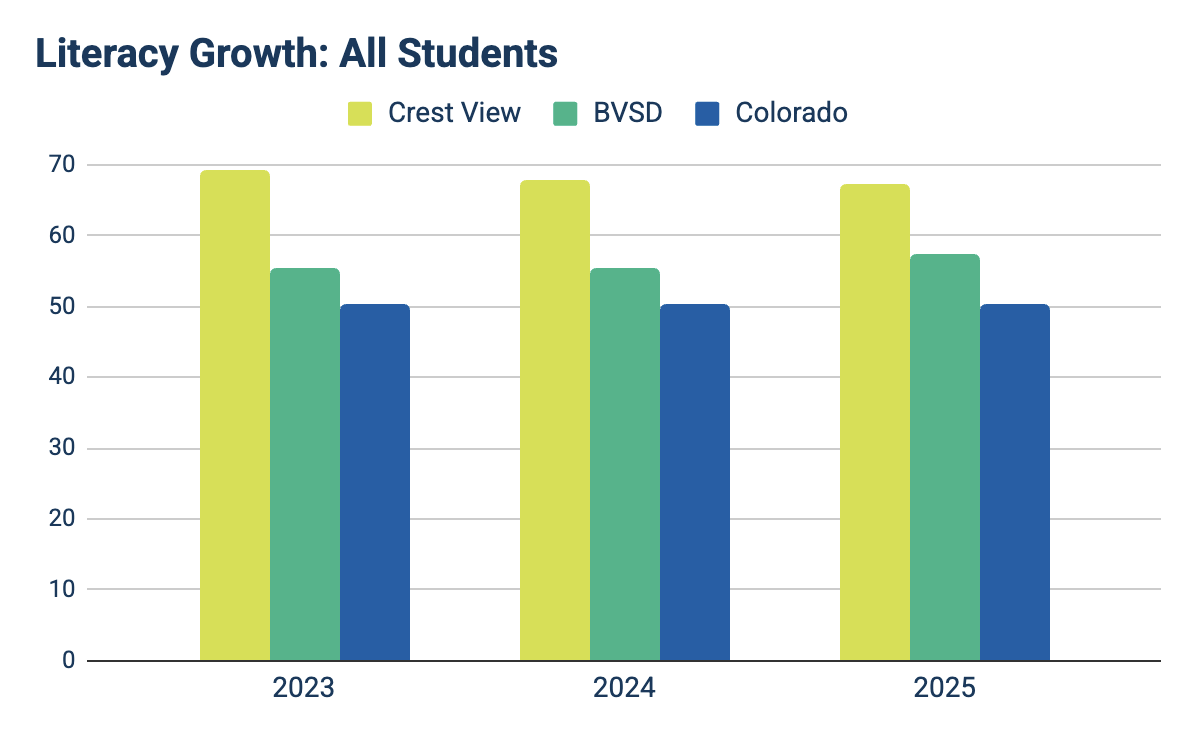
*The Colorado Department of Education measures academic growth using a complex and imperfect measure called “median growth percentile” or MGP. First, a student is grouped with peers who have a similar academic history. Then, the student’s improvement on state assessments is compared to those peers. A student who scores in the 50th percentile improved more than half of peers with a similar academic background. Growth at or above the 65th percentile is considered “high.” MGP is one of the measures used to calculate School and District Performance Framework scores, which tell the public how well schools and districts are doing in improving student outcomes on key performance indicators.
In a strong testament to the quality of Crest View’s differentiated support, students who face additional barriers to reading and writing have also improved above and beyond state and district averages. English learners’ growth scores jumped from the 51st percentile in 2023 to the 61st percentile in 2025.
In addition, children with a documented reading intervention (which might include, for example, specialized dyslexia services) improved from typical growth (51st percentile) to high growth (65th percentile) during that same time period.
In the garden, there’s always more work to do. To borrow the words of poet Camille T. Dungy, that’s “[b]ecause gardens are living, growing, demanding, and dynamic” (just like our kids). While Crest View students’ literacy improvement is worth celebrating, educators serving our school community continue to focus on maintaining and accelerating progress for each and every student — during each lesson, via seasonal 90-day data cycles, and from one crop of students to the next.
As for upcoming priorities, now that the new elementary math curriculum and multifaceted instructional supports are in place, Principal Hamilton expects to see strong growth scores for Crest View students in mathematics in the years ahead. Like an apple tree that spends its first few years growing a strong root system and sturdy branches before bearing deliciously sweet, tart, or tangy fruit, it typically takes a school two to three years to yield meaningful student achievement gains after instituting a new curriculum or major shift in instructional strategy. We can generally expect the best results beginning in year four or five.
VI. Lessons from the Garden
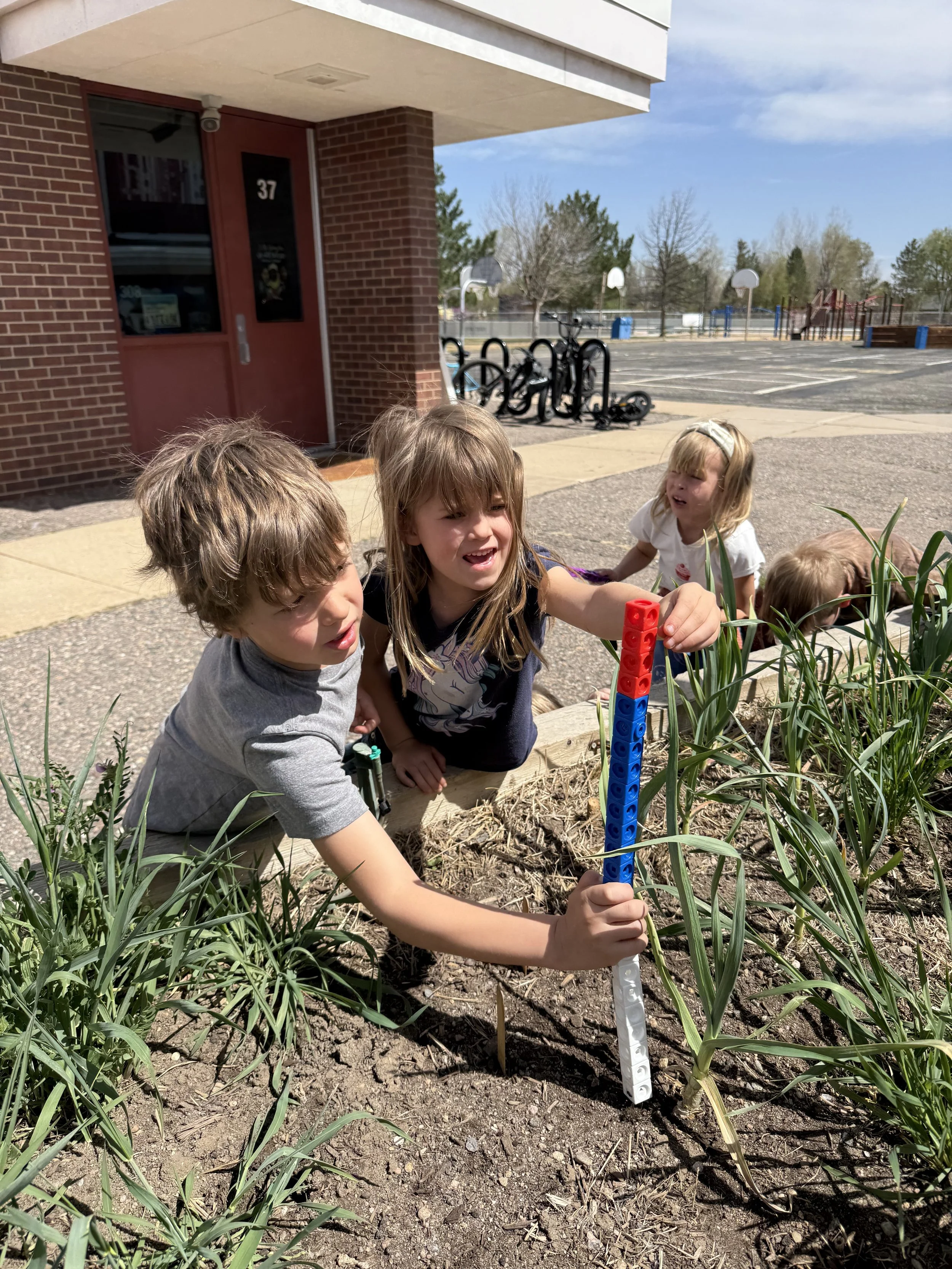
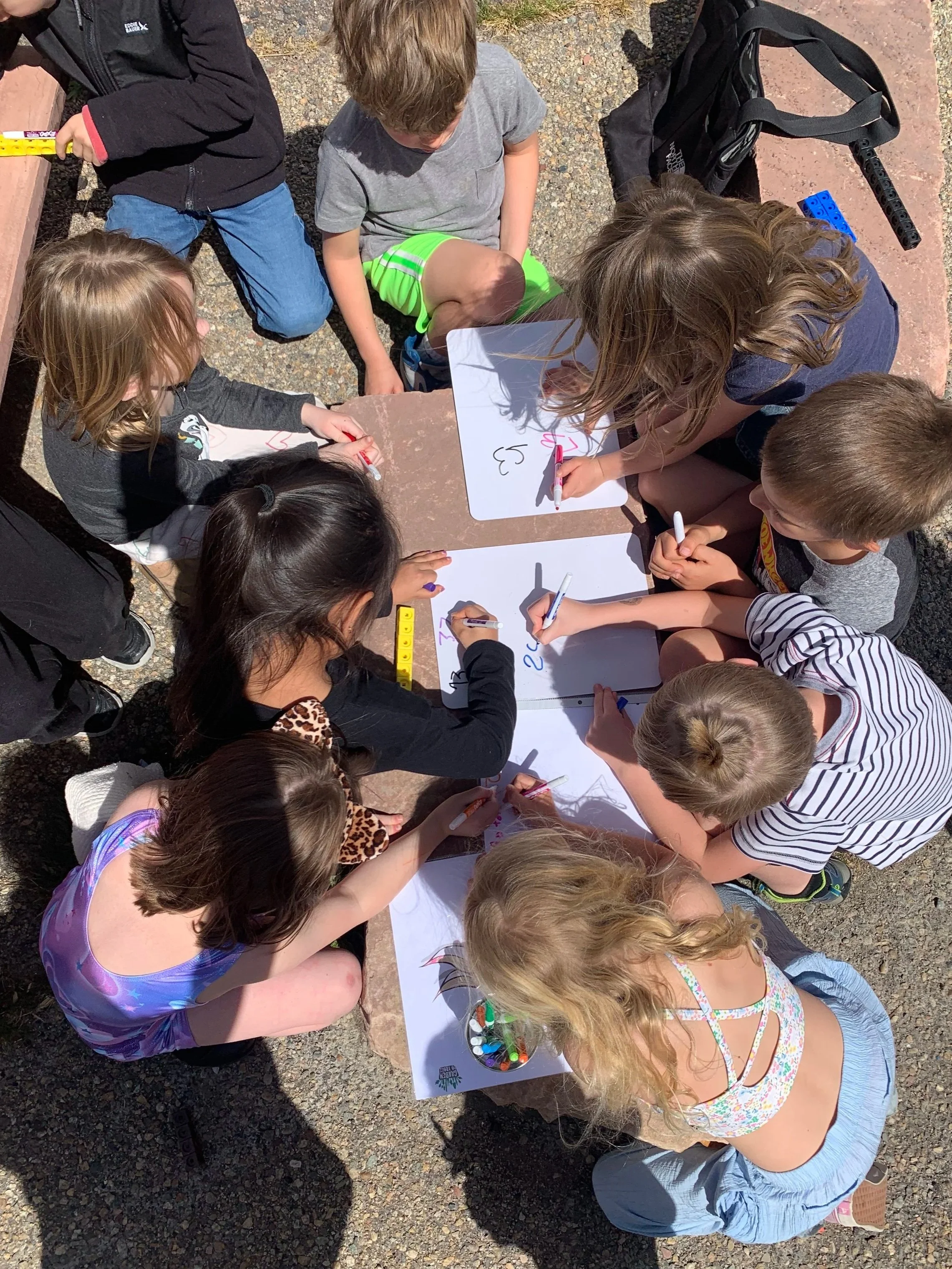
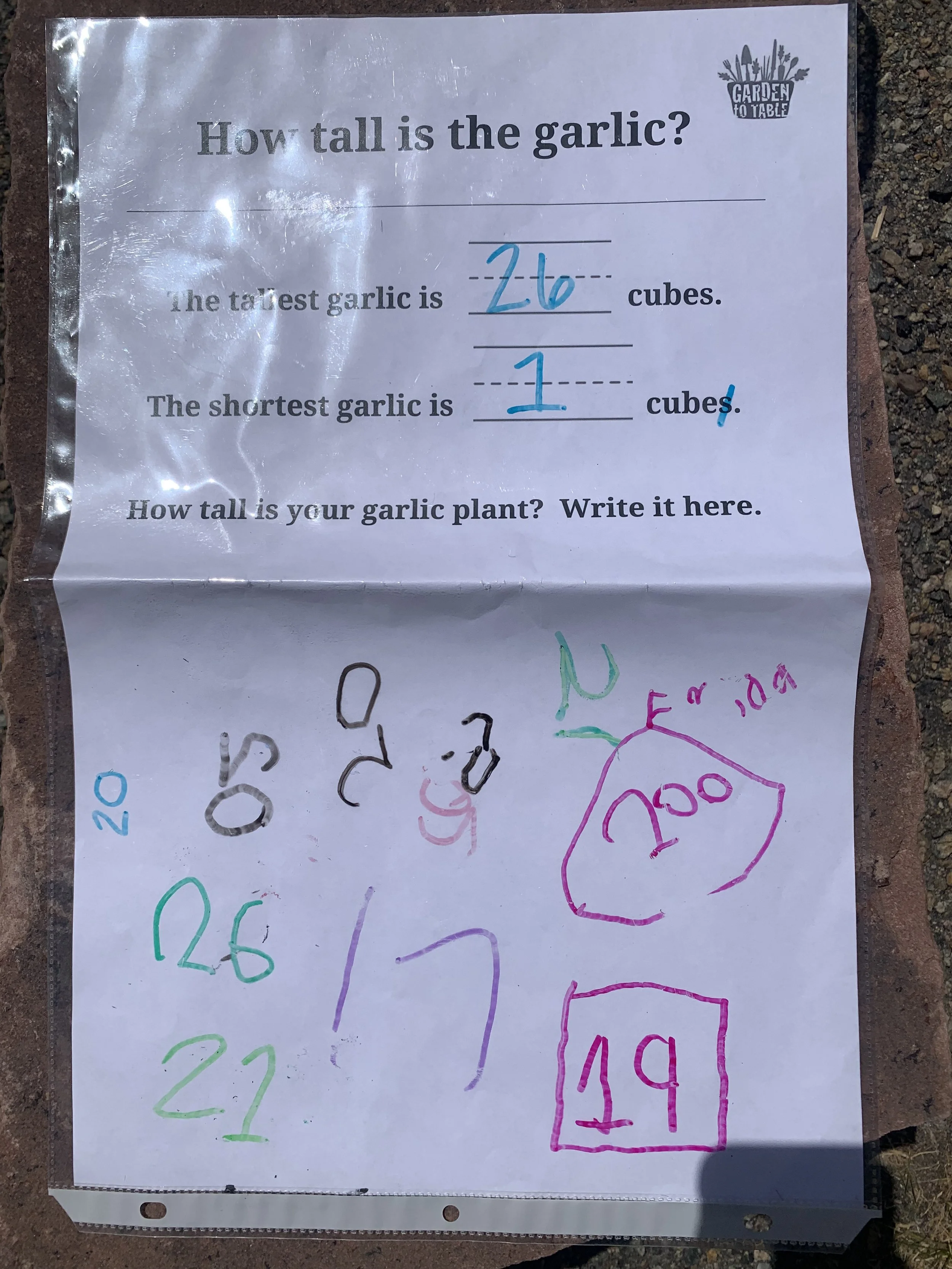
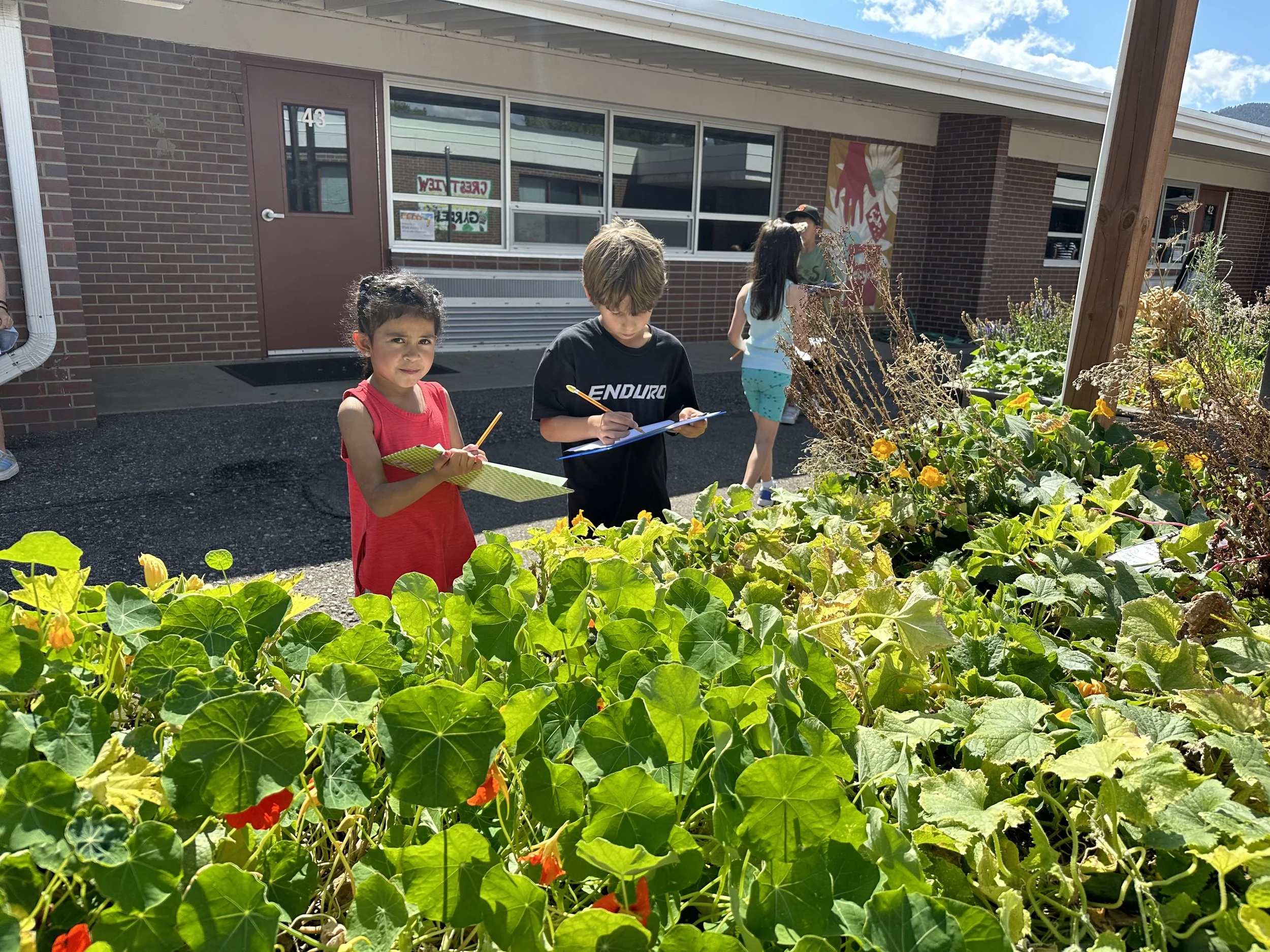
Back at the raised planters, the kindergarteners are busy with our third and final lesson of the year. They’re identifying the tallest and shortest garlic plants, using the cubes to measure the height of each specimen (students won’t officially start using rulers until second grade, but they start building their conceptual understanding of measurement much earlier), and documenting their findings.
As I absorb their special kindergarten energy and enthusiasm, I’m struck by how much they’ve learned and grown this year. I’m equally moved by everything I’ve learned by spending time alongside Crest View educators and students in the gardens.
Stories about the yummy, garlic-infused recipes that the children and teachers make at home linger in my mind, along with the rich cultural and familial traditions in our community. (New ingredients have also made their way onto my grocery list.)
I learned who has a garden at home and who was putting on their gardening gloves for the very first time. I admired a student who deftly shucked the crispy husk of a ground cherry (“It’s like my mom’s tomatillos!”) and I got to celebrate a student who, cautious and perhaps a bit anxious in the fall, had blossomed into a confident botanical explorer by the spring.
Observing the children being at turns helpers, leaders, and learners showed me how students’ strengths can shift right along with their environment. Watching them watch each other step in and out of those roles was profound testament to how inclusive and empowering outdoor education can be for our kids, providing authentic opportunities for all students to shine and discover what they’re capable of.
The silly goofballs, like the giggling girl who claimed to eat garlic-flavored ice cream on the weekends and the cheeky boy who insisted that he had found a garlic plant measuring 200 (!) cubes high, reminded me that serious learning can – and should! — be accompanied by unfettered joy.
I saw students being brave when a wasp zigzagged by, reflective as a red-tailed hawk soared overhead, and studious as a bevy of pill bugs curled up as roly-polies in the soil, beckoning everyone to come look.
I got to know Ms. Zungolo and Ms. Lindsay in new ways — to see their warm, demanding, and unfathomably patient instructional leadership in action — and to be wowed again and again and again by how they consistently nurture and support our children. Like all of the incredible educators at Crest View, they make it look effortless. But in facilitating pieces of the garden lessons this past year, I was reminded how much thoughtful effort goes into the exceptional learning experiences we count on for our kids.
I was further reminded of what a gift it is for our children to have a neighborhood public school where they can be wild and curious and careful and carefree and unapologetically kids, even as they are challenged to reach the highest levels of academic performance.
And I saw firsthand that the thriving learning community Friedrich Fröbel envisioned all those years ago, when he dreamed of schools where children could experience “living, life-giving, and life-stirring instruction,” is flourishing, right here in the Crest View gardens.
Click below for garden-themed book lists from the Boulder Public Library’s collection.
VII. The Joy of Reading
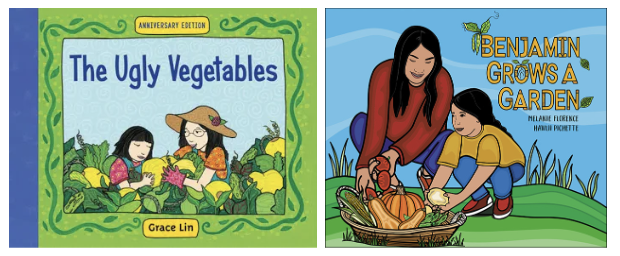
Picture books and books for early readers that kids and grownups can enjoy together.

Chapter books for middle readers that are also great for family read-alouds.
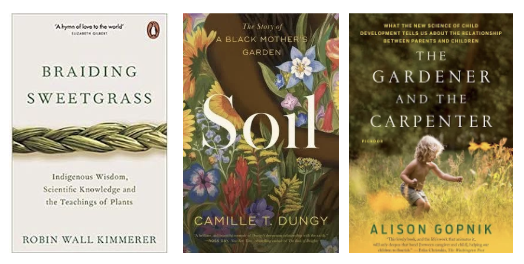
Books for grownups that we can read on our own and talk about with our kids.
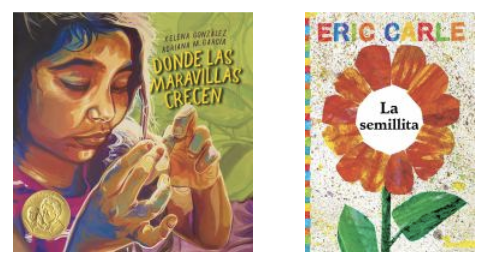
¡Muchos de estos libros también están disponibles en español!